Marketing for SaaS companies that takes buyers from demo to a paid contract

A software product is hard to explain in a single ad, and there is never just one buyer: an engineer checks the architecture, a department head weighs the impact, and security asks where the data lives. We build SaaS marketing around that path, from the first article and demo to the pilot, the paid plan and the renewal.

Reply within 15 minutes · project assessment — free · pricing on request

Software company office: a monitor with a product interface mockup, a laptop showing analytics and a notebook with a sales funnel sketched on it

Marketing for SaaS companies is the work of generating demand for a software product or a development service. It rests on expert content for technical buyers, search and ads built around customer problems, demos and free trials, listings on review sites and app marketplaces, and analytics that follow an account from signup through payment to renewal.

Why software marketing doesn’t turn into revenue

Situations that SaaS founders, development studios and integrators bring to us.

“Plenty of signups, almost nobody pays”

Ads bring people who log in to look around, configure nothing and forget the product. Sales calls every one of them anyway.

We tie advertising to events inside the product: activation, a connected integration, teammates invited. Channels are optimized for the users who reached value, not for the ones who filled in a signup form.

“Everyone who knows us found us through a referral”

A development studio lives on word of mouth and a couple of large clients. When one leaves, the team sits idle and there is no pipeline behind it.

We build an inbound flow: expert articles, project write-ups that respect your NDAs, pages for industry-specific problems, and search and ads on queries like “custom software development”, “implementation partner” and “integration”.

“The site is written for developers, but a VP signs the contract”

The stack and architecture are described in detail, yet nothing answers “what will this do for the business and how long does rollout take”.

We split the site and the content by role: technical docs for the engineer, use cases and outcomes for the business owner, security and data-handling answers for the IT and compliance reviewer.

“Ads on broad keywords burn the budget”

Searches like “CRM software” or “app development” attract students, job seekers and people hunting for something free.

We work with narrow queries built around problems, integrations and alternatives, add negative keywords for jobs and tutorials, and retarget the people who read your docs and pricing page.

What’s included in marketing for a SaaS company

A SaaS product, a custom development studio and a systems integrator are marketed differently. We assemble the work around your sales model.

Positioning and segments

Which problem and which industry the product fits best, how it differs from the alternatives buyers shortlist, and who inside the customer’s company makes the decision.

Website and product pages

Pages for use cases and industries, integrations, security, documentation and a clear demo request form. If you need a full build, see web development.

Search around customer problems

SEO and articles that answer the questions buyers ask before they pick a product: how to automate a process, what to replace a retired tool with, how to connect two systems.

Paid search and social

Google Ads on narrow queries such as alternatives, integrations and industry solutions, plus LinkedIn for account-based reach. Separate campaigns for demos and free trials, and retargeting for readers of your documentation.

Expert content and communities

A company blog, engineering write-ups, newsletters, webinars and conference talks. For a technical audience this is the main source of trust, along with developer communities such as Hacker News, Reddit and dev.to.

Review sites and marketplaces

Profiles on G2, Capterra and GetApp, and listings in app marketplaces such as the Salesforce AppExchange, the HubSpot App Marketplace or the Shopify App Store. We also set up partner programs with integrators.

Public-sector and enterprise sales

For government and large-company buyers: monitoring of public tenders on portals like SAM.gov and Find a Tender, material for procurement packages and security questionnaires, and project descriptions that don’t expose confidential data.

Analytics down to revenue

End-to-end tracking from the source to signup, activation, payment and renewal. Budget decisions follow revenue and retention rather than clicks.

Systems we connect

In SaaS most of the data lives inside the product. Without a link between the product, the CRM and the ad accounts, you can’t see which channel brings in money.

CRM

HubSpot, Salesforce or Pipedrive: deals for demos, pilots and contracts, plus the security-review and procurement stages of an enterprise sale.

Product analytics

Product events such as signup, activation and payment are passed to Google Analytics 4 and the CRM, so ad platforms learn from paying customers. Mixpanel, Amplitude or PostHog work well alongside them.

Google Analytics 4 and offline conversions

Deal stages from the CRM are sent back to Google Ads and GA4, so campaigns optimize toward paid accounts instead of leads. We configure consent handling for GDPR and CCPA at the same time.

Payments and billing

Stripe, Chargebee or Paddle data on payments and renewals is matched to the original source of the customer, so channel payback is measured over the long term.

Email and messaging

Onboarding sequences after signup, trial-expiry reminders, product update emails, in-app messages and a chat widget for support and demo bookings.

Free audit of your marketing

Leave your contact — we'll show where leads and money leak, which channels to scale and which to switch off. No sales pitch.

Thank you! Request received — we'll get back with your marketing audit within one business day.

The buyer journey for a software company

A software purchase passes through several people and several checks. We build marketing for each stage.

Step 01

A problem appears

The company hits a snag: a manual process, a vendor that is being retired, a new customer requirement. A specialist starts looking for how others solve it.

Step 02

Research

They read articles, comparison pages and documentation, check G2 and Reddit threads and put together a short list of tools.

Step 03

Demo or free trial

They sign up or ask for a demo. A quick first result matters here, and so does a rep who can answer technical questions.

Step 04

Pilot and approvals

A pilot on part of the process, a security review, sign-off from procurement and legal. We prepare materials for each role in advance.

Step 05

Contract

Payment, a signed agreement or a tender award. The CRM records the source and the whole chain of touchpoints.

Step 06

Retention and expansion

Onboarding, training, new modules and seats. A satisfied customer turns into a review and a referral.

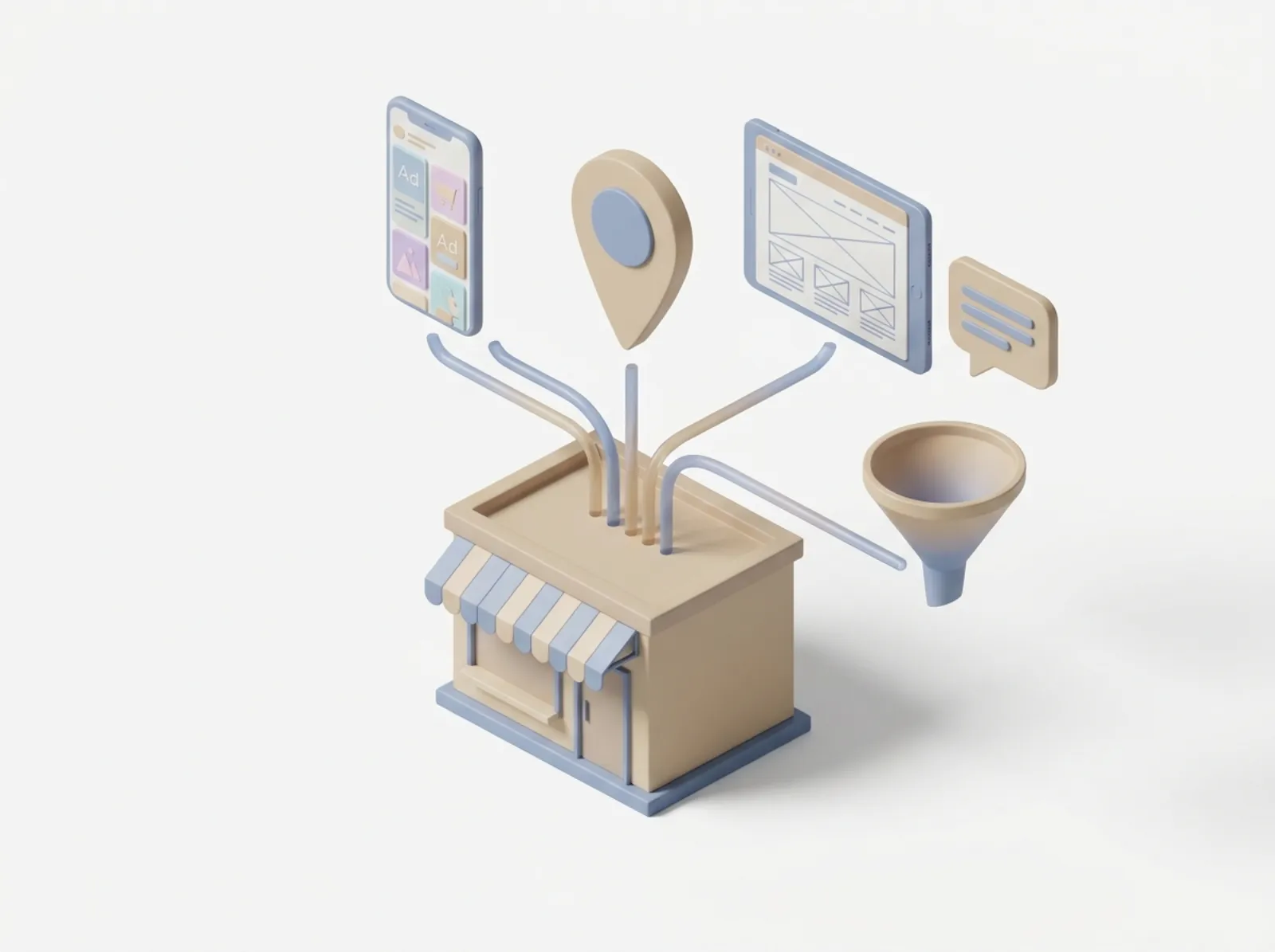
Isometric diagram of software marketing: search, content, ads and messaging channels converge into one funnel from demo to payment
We bring every SaaS marketing channel into a single funnel: signup, demo, pilot, payment and renewal.

Marketing channels for different software businesses

The sales model determines the channels more than the technology or the stack does.

ModelMain channelsWhat to emphasize
Self-serve SaaS for small businessGoogle Ads, SEO, review sites, app marketplaces, onboarding emailsA fast first result, a free trial, clear plans and pricing on request
Enterprise softwareExpert content, conferences, outbound, LinkedIn, public tendersSecurity, integrations, a pilot, materials for executive buyers
Custom development studioSEO by project type, case write-ups, referrals, portfolioWorking process, team, timelines, project walkthroughs
Integrator or implementation partnerVendor partnership, ads on the vendor’s product terms, webinarsPartner status, industry expertise, ongoing support
Alternative to an incumbent productSearch on competitor and “alternative to” terms, comparison pages, PRCompatibility, data migration, a clear switching plan

Who it’s for, and who it isn’t

A good fit if

  • A SaaS company with a product and the first paying customers but no predictable pipeline.
  • A custom development studio that wants to stop depending on referrals.
  • An integrator or vendor partner that needs implementation requests in its own region and industry.
  • A software company positioning itself as an alternative to an established product.

Not a fit if

  • The product is still an idea: you first need demand validation and a few hands-on customers, not large-scale marketing.
  • Nobody is available to run demos and answer technical questions: leads will be lost on the first call.

What matters in marketing for a software company

A technical audience reacts badly to promises and well to specifics. A developer wants to see documentation, the API, the limits of the product and an honest comparison with alternatives. A business owner wants rollout scenarios and timelines. That is why the core of SaaS marketing is expert content written together with your engineers, not copy about “digital transformation” from a generalist marketer.

The second factor is a long, multi-stage cycle. Months can pass between the first article and the first payment, and several people take part in the decision. A report on leads shows very little here. We measure the path to payment and renewal, and we distribute budget to the channels that bring paying customers.

The third is trust and compliance. Enterprise and public-sector buyers ask for a security questionnaire, a data processing agreement and, often, a SOC 2 or ISO 27001 report. Handling customer personal data also has to follow GDPR and, for California users, CCPA. We bring these answers onto the site and into the materials for security reviewers, because they often decide the choice before features do.

  • Content that engineers review, not only marketers.
  • Tracking down to payment and renewal.
  • Materials for every role in the deal.
  • Clear answers on security and data handling.

Checklist: what to prepare before we start

If something is missing, we’ll help you put it together in the first phase.

  • A description of the product or service, the key use cases and the industries you serve.
  • A list of direct competitors and alternatives that customers mention on demo calls.
  • Documentation, a description of your integrations and answers to common security questions.
  • Who runs demos and pilots, and how much time the team has for them.
  • Access to the website, Google Analytics 4, ad accounts and the CRM.
  • Which events inside the product mean a customer has received value.

FAQ: Marketing for SaaS

We quote on request after a brief. The price depends on your sales model, the set of channels, the volume of content and whether product analytics and the CRM need to be set up. Ad budgets are discussed separately against your revenue goals.
Usually search on problems and alternatives, Google Ads aimed at demos and free trials, review sites, app marketplaces and onboarding email sequences. What decides the outcome is how well the product keeps a user after signup.
Through expert content and a portfolio: project walkthroughs that keep confidential details out, articles on your blog and LinkedIn, pages for project types and industries. Add search and ads on queries for specific kinds of software development.
If your buyers are technical specialists, yes: that is where they read and discuss tools. The material has to be useful on its own, without a hard sell, or communities like Hacker News and Reddit will reject it.
Software has a free trial, product analytics and a technical audience that checks everything itself. The general principles of a long deal are covered on the page about marketing for B2B companies.
The first demos and signups appear before payments because the sales cycle is long. Timing depends on the product, the segment and how quickly the channels launch. Results depend on the product and the market, so we agree on stages and reporting before we start.

Tell us about your business — we'll come back with a marketing plan

In return you'll get an audit of your current marketing, the points where leads leak and a channel plan. Usually within one day. Free and with no obligation.

4 of 6 project slots open this week.

Request received

Thank you! We'll come back with your marketing audit, the points where leads leak and a channel plan — usually within one business day.

More from Growth Bureau

Get an audit