Marketing for logistics companies that brings in repeat shippers

One-off loads aren’t enough in logistics: the business stands on shippers who move freight with you every month. We build marketing for a logistics company around the B2B cycle, from the first request for a quote to a recurring contract, with every inquiry and deal tracked.

Reply within 15 minutes · project assessment — free · pricing on request

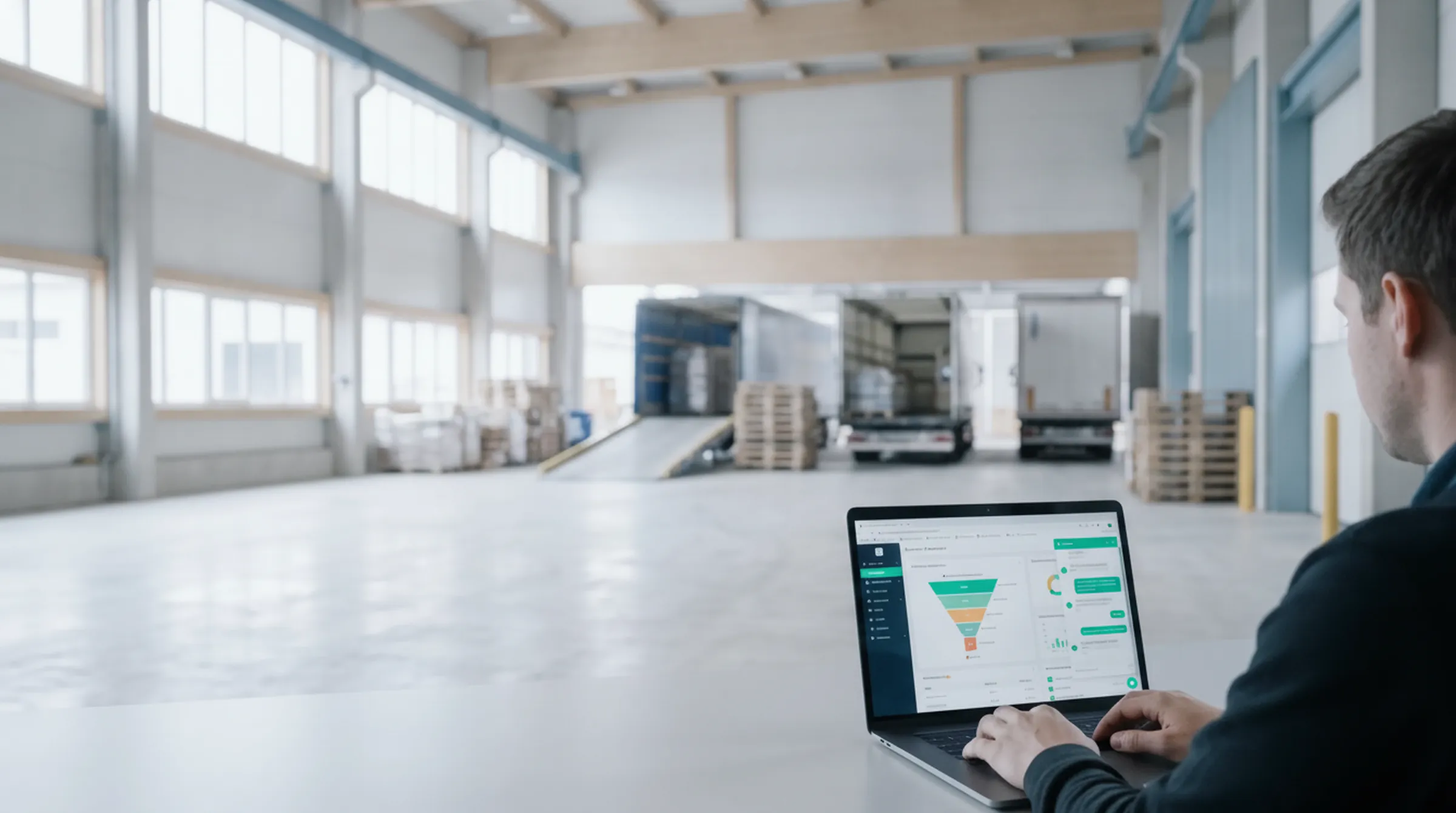
A logistics warehouse with trucks at the loading docks and pallets, and a manager’s laptop showing a marketing dashboard with an inquiry funnel

Marketing for logistics companies is a set of marketing work for carriers, brokers, freight forwarders, warehouses and fulfillment providers: positioning, a website with lane and service pages, SEO, Google Ads, load boards, trade shows and direct B2B outreach. We build these channels to bring in repeat shippers and measure the result in booked deals.

Why a logistics company doesn’t have enough customers

Situations carriers, freight forwarders and warehouse operators bring to us.

“They pick us on rate alone and leave the moment someone is cheaper”

Without a clear difference, a logistics company competes on price with hundreds of carriers, and margin erodes with every new bid.

We define positioning: a specialty in freight types, lanes and industries, tracking and visibility, insurance coverage, accountability. The shipper chooses reliability, not only the rate.

“All our orders come from three large customers”

If one of them changes vendors, utilization of the fleet or warehouse drops within a month, and there is no time left to look for new accounts.

We build a steady flow of new shippers from several channels, so the company doesn’t depend on one contract.

“We tried Google Ads, and the leads were expensive and junk”

The ads lead to the home page, and broad queries bring in people with a one-time household move instead of companies with regular shipments.

We segment campaigns by service and lane, send traffic to dedicated landing pages, filter out irrelevant searches and feed lead quality back into the ads.

“Reps sell, but there is no marketing system”

Every salesperson prospects in their own way, contact history gets lost, and nobody follows up with potential customers.

We connect marketing and sales: a prospect database, touch sequences, email campaigns and a CRM with stages from quote request to contract.

What’s included in marketing for a logistics company

The mix of channels depends on the profile: trucking, international freight forwarding, warehousing and fulfillment, and last-mile delivery are promoted differently.

Positioning and packaging

A specialty, strengths, service commitments that don’t promise the impossible, a sales proposal and a presentation for the sales team.

Lane and service pages

Separate landing pages for routes, modes and freight types: LTL, refrigerated, oversize loads, import from Asia, fulfillment for ecommerce sellers.

SEO by lane and service

Search targeting on queries like “LTL shipping Chicago to Dallas,” “import freight from China” and “bonded warehouse.” A long tail of lanes brings in qualified shippers.

Google Ads

Campaigns by service and lane, exclusion of household moves, and retargeting people who requested a quote but didn’t submit it.

Load boards and platforms

A profile and ratings on DAT and Truckstop, work with large shippers’ procurement portals, and warehouse listings on maps.

Direct B2B outreach

Segmentation of target companies by industry and shipment volume, first-contact scripts, and email and call sequences.

Content and expertise

Walkthroughs of changes in customs and trade regulation, packaging and documentation guides, and customer newsletters. They keep the relationship alive between orders.

Trade shows and industry events

Preparation for events such as ProMat or MODEX and industry conferences: materials, meetings and follow-up on contacts after the show.

Systems we connect marketing to

In logistics, a deal goes through rate calculation and terms negotiation. Without a link between marketing and sales, it’s unclear which channel brings contracts.

CRM

HubSpot, Salesforce or Pipedrive with the stages “quote request, rate, trial shipment, contract, recurring volume” and the source of each deal.

Rate calculator

A preliminary quote on the site by lane, weight and volume, with the parameters passed into the CRM so the rep calls with an answer ready.

TMS and accounting

McLeod, Turvo, Descartes or another transportation management system, plus your accounting software: volume by customer, so you can see which new accounts became regular.

Phone and call tracking

Tracking numbers by channel, call recording, and monitoring of how fast an inbound request gets an answer.

Analytics

Google Analytics 4, a link to the CRM and a channel report: inquiries, contracts, shipment volume.

Free audit of your marketing

Leave your contact — we'll show where leads and money leak, which channels to scale and which to switch off. No sales pitch.

Thank you! Request received — we'll get back with your marketing audit within one business day.

How we build marketing for a logistics company

We launch channels in turn: first what brings inquiries fastest, then what lowers their cost over time.

Step 01

Audit and interviews

We review current customers: where they came from, which freight and lanes are most profitable, why they chose you. We look at competitors and how they present themselves.

Step 02

Positioning and offer

We define target shipper segments and the main arguments for each. We prepare the proposal and the presentation.

Step 03

Landing pages and tracking

Pages for key services and lanes, a calculator, a CRM with deal sources and conversion goals in Google Analytics.

Step 04

Channel launch

Google Ads, SEO by lane, load boards and direct sales by segment. Every channel gets its own tags and report.

Step 05

Analysis and scaling

We count contracts and shipment volume by channel, not inquiries. We strengthen what brings regular customers.

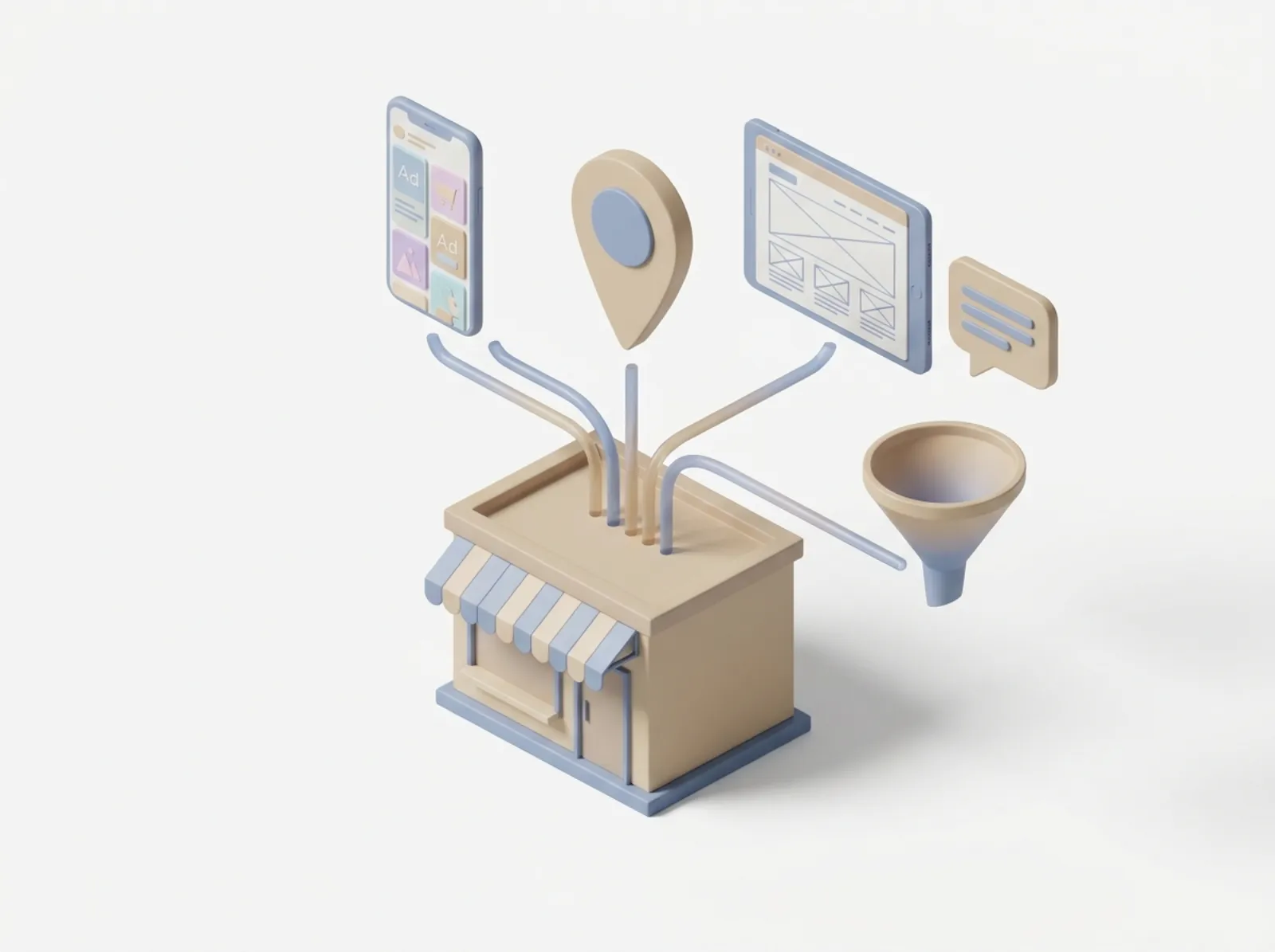
Isometric marketing diagram: a storefront, a smartphone, a map pin, a website and messages converge into a sales funnel
Search, ads, load boards and direct sales converge in one funnel for the sales team.

Channels for different types of logistics

The company’s profile decides which channels bring customers fastest.

Type of logisticsWho the customer isMain channelsMain argument
Trucking and LTLManufacturers, distributors, retailersGoogle Ads, SEO by lane, load boardsTransit times, tracking, responsibility for the cargo
International freight forwardingImporters, ecommerce sellers, manufacturersSEO and content on customs, Google Ads, trade showsExpertise in documents and customs clearance
Warehousing and fulfillmentMarketplace and Shopify sellers, online storesGoogle Ads, seller communities, LinkedInShipping speed, integrations with marketplaces and carts
Last-mile deliveryOnline stores, corporate customersSEO, Google Ads, partnerships with platformsCoverage, speed, integration with the store’s website
Specialized and oversize freightConstruction, energy, industryDirect sales, public and private tenders, trade showsExperience, permits, equipment

Who it’s for, and who it isn’t

A good fit if

  • A carrier or forwarder that wants less dependence on a few large customers.
  • A warehouse or fulfillment provider looking for new sellers and online stores.
  • A company launching a new lane or service that needs a flow of first customers.
  • You have a sales team, but marketing runs in pieces and doesn’t produce measurable deals.

Not a fit if

  • A carrier that only needs one-off loads from a board can work the board itself.
  • You can’t respond to rate requests quickly: without response speed, marketing in logistics doesn’t pay off.

Features of marketing in logistics

Logistics is B2B with a long cycle and a high price of error for the customer. A missed delivery costs a shipper more than any difference in rate, so the decision rests on reliability: experience with similar freight, insurance, tracking and clear liability. We build marketing around those arguments, not around the word “cheap.” Buyers also check basics such as operating authority, a USDOT number and cargo insurance, so those facts belong on the site.

Demand in logistics splits by lane and freight type. Queries like “LTL freight to Atlanta” or “equipment transport from Asia” have low volume, but every one comes from a person with a specific shipment in mind. Separate pages for key lanes and services bring in customers who already know what they need and are ready to get a quote.

The main point of loss is response speed. A shipper sends a request to several companies and works with the one that sends a clear quote first. That is why, in marketing for a logistics company, we always check how inquiries are handled: response time, quality of the quote, follow-up touches. Sometimes that gives more than a new ad channel.

If your site can’t calculate a rate and has no lane pages, start there: see our page on web design for logistics companies. And if inquiries get lost between reps, a CRM for logistics will help.

Checklist: is your company ready for marketing

If most of these items are in place, marketing will pay off faster. We help close the rest at the start.

  • You know which freight, lanes and customers bring most of your margin.
  • You have a sales proposal and a company presentation.
  • The site has pages for key services and a quote request form.
  • Inquiries are logged in a CRM with their source.
  • Response time to a request and the person responsible for pricing are defined.
  • You have a load board profile and warehouse listings on maps, if you need them.

FAQ: Marketing for logistics companies

We quote on request after an audit. The price depends on the number of lanes and services, the set of channels and whether you need a new website. Ad spend is agreed separately and used after the plan is approved.
For most companies the foundation is search: SEO by lane and Google Ads by service. Load boards, direct B2B outreach and trade shows complement them. The mix depends on who your customer is.
Through seller communities and groups, Google Ads on fulfillment queries and detailed pages about processes, marketplace and cart integrations and shipping times. Sellers choose on speed and transparency.
We separate ad campaigns by service, exclude household moving and small personal shipments, and state plainly on the landing pages which customers and freight you work with. We track inquiry quality in the CRM.
The first ad inquiries come soon after launch, while SEO by lane builds over several months. Contracts in logistics follow trial shipments, so we judge results over a horizon of several months.
For international logistics, specialized freight and work with large manufacturers, yes: it is a way to meet decision makers. Book meetings in advance and follow up on contacts quickly after the show.
Yes. For a small company we start with positioning, pages for key lanes and one or two channels that will bring customers fastest.

Tell us about your business — we'll come back with a marketing plan

In return you'll get an audit of your current marketing, the points where leads leak and a channel plan. Usually within one day. Free and with no obligation.

4 of 6 project slots open this week.

Request received

Thank you! We'll come back with your marketing audit, the points where leads leak and a channel plan — usually within one business day.

More from Growth Bureau

Get an audit