Marketing for agribusiness that is ready before the buying season

In agriculture, decisions follow the calendar of the field: seed and fertilizer are bought long before planting, equipment after the yield is counted, and the crop is sold in a narrow window after harvest. Start marketing a month late and the season goes to a competitor. We build marketing around that calendar and around the people who actually make decisions on the farm.

Reply within 15 minutes · project assessment — free · pricing on request

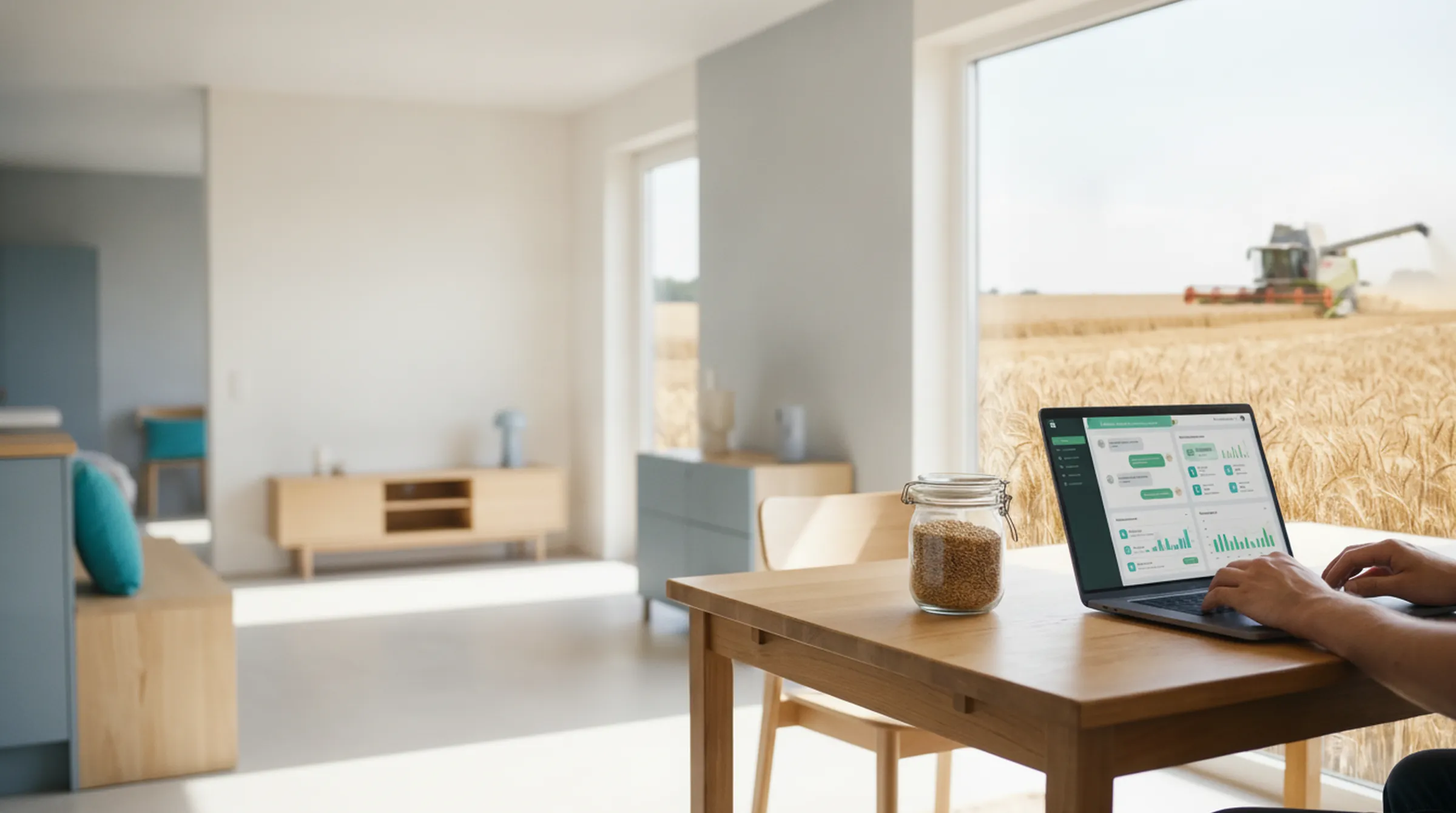
A laptop with marketing analytics and a jar of grain on a wooden table beside a wheat field, a combine working in the distance

Marketing for agribusiness is the marketing of companies that grow and sell agricultural products or serve growers: suppliers of equipment, seed, fertilizer and crop protection, processors and farms. It follows the seasonal calendar and combines trade shows, search, Google Ads, equipment marketplaces, dealer work and a CRM.

Why agribusiness marketing doesn’t work

Situations that farms, suppliers of equipment and crop inputs, and processors bring to us.

“We start advertising when the season is already under way”

Farms build their purchasing plans in advance. If a supplier shows up at planting time, the budget has already been spent elsewhere.

We build a marketing calendar from the customer’s cycle: when the farm plans, compares and pays. Channels start before the decision window, not in the middle of it.

“The agronomist and the farm owner aren’t on social media all day”

Ads designed for an urban audience bring views but not calls from farms.

We work where growers look for solutions: trade shows and field days, searches for specific crops and technologies, equipment marketplaces, farm publications and agronomy newsletters.

“Our farm products only sell to middlemen”

The farm depends on a few wholesale buyers who dictate the price, and has no direct route to stores, restaurants and individual buyers.

We build your own sales channel: a website or a product catalog, listings on local food and farm directories, outreach to restaurants and stores, and subscription delivery to households.

“Dealers sell in their own way and we can’t see the picture”

A manufacturer of equipment or inputs doesn’t know how many inquiries its ads produced and how many of them the dealers closed.

We route leads to dealers through the CRM, agree on statuses and see the customer’s path from the ad to the delivery.

What’s included in agribusiness marketing

A supplier of equipment, a seller of seed and crop inputs, a farm and a processor market in different ways. We assemble the scope for your model.

Seasonal strategy

A map of customer decisions by month: when they plan purchases, when they pay, when they sell the crop. Budget and messages for each channel follow from it.

Website and catalog

A catalog of equipment, seed or products with specifications, application guidance and recommendations by crop and region. For a farm, a storefront with delivery terms.

Search and paid search

Google Ads and SEO for crops, hybrids, equipment models, products and regions. A grower searches for something specific, so the ad has to answer specifically.

Marketplaces and listings

Listings for equipment, parts and products on TractorHouse and Machinery Pete, and on local food and farm directories for direct-to-consumer sales.

Trade shows and field days

Preparation for industry events such as the Farm Progress Show, Commodity Classic or regional farm shows: materials, meeting appointments, contact capture and follow-up. Field days on demonstration plots.

Content and expertise

Demo plot results, technology explainers, video of equipment working in the field, agronomist advice. Growers trust what they have seen on another farm.

Dealer work

Shared materials for the dealer network, routing of leads by territory and control of how they are handled. A CRM for agribusiness helps here too.

Analytics through to delivery

Ads, calls and deals tied together: you see which channel brings farms that buy and come back the next season.

Systems we connect

In agribusiness many deals happen by phone and through dealers. Without linked data, marketing can’t see the result.

CRM

HubSpot, Salesforce or Pipedrive: a pipeline by farm, seasonal deals, repeat purchases and lead routing to dealers.

ERP and accounting

Microsoft Dynamics 365 Business Central, NetSuite or SAP Business One: stock, shipments and payments flow back to the deal.

Call tracking

Growers call more than they write. Tracking numbers show which channel brought the call, even if the deal closes months later.

Google Analytics 4 and offline conversions

Statuses from the CRM are sent to Google Ads, so campaigns learn from real buyers rather than random clicks.

Messaging and farm software

WhatsApp and SMS in one CRM inbox: the agronomist sends a photo of a field or a machine, the rep replies and records the deal. Where the customer uses farm management platforms, we link field and order data.

Free audit of your marketing

Leave your contact — we'll show where leads and money leak, which channels to scale and which to switch off. No sales pitch.

Thank you! Request received — we'll get back with your marketing audit within one business day.

The customer journey in agriculture

Decisions in agribusiness are tied to the field season. We plan marketing so that you are present at every step.

Step 01

Season results

After harvest the farm counts the results and decides what to change: hybrids, fertilizer, equipment, the buyers of the crop.

Step 02

Looking at options

The agronomist and the owner study demo plot results, go to trade shows, search the web and ask neighbors.

Step 03

Contact and quote

A call, a website request or a meeting at a show. The rep gets the inquiry with its source and the farm’s needs.

Step 04

Proposal and proof

A quote, a crop protection program or delivery terms, sometimes a trial order or a demonstration of equipment in the field.

Step 05

Deal and delivery

Contract, payment, delivery by the needed date. The CRM records which channel the farm came from.

Step 06

Support and repeat

In-season consulting, equipment service, results on the customer’s own field. A satisfied farm comes back and recommends you to neighbors.

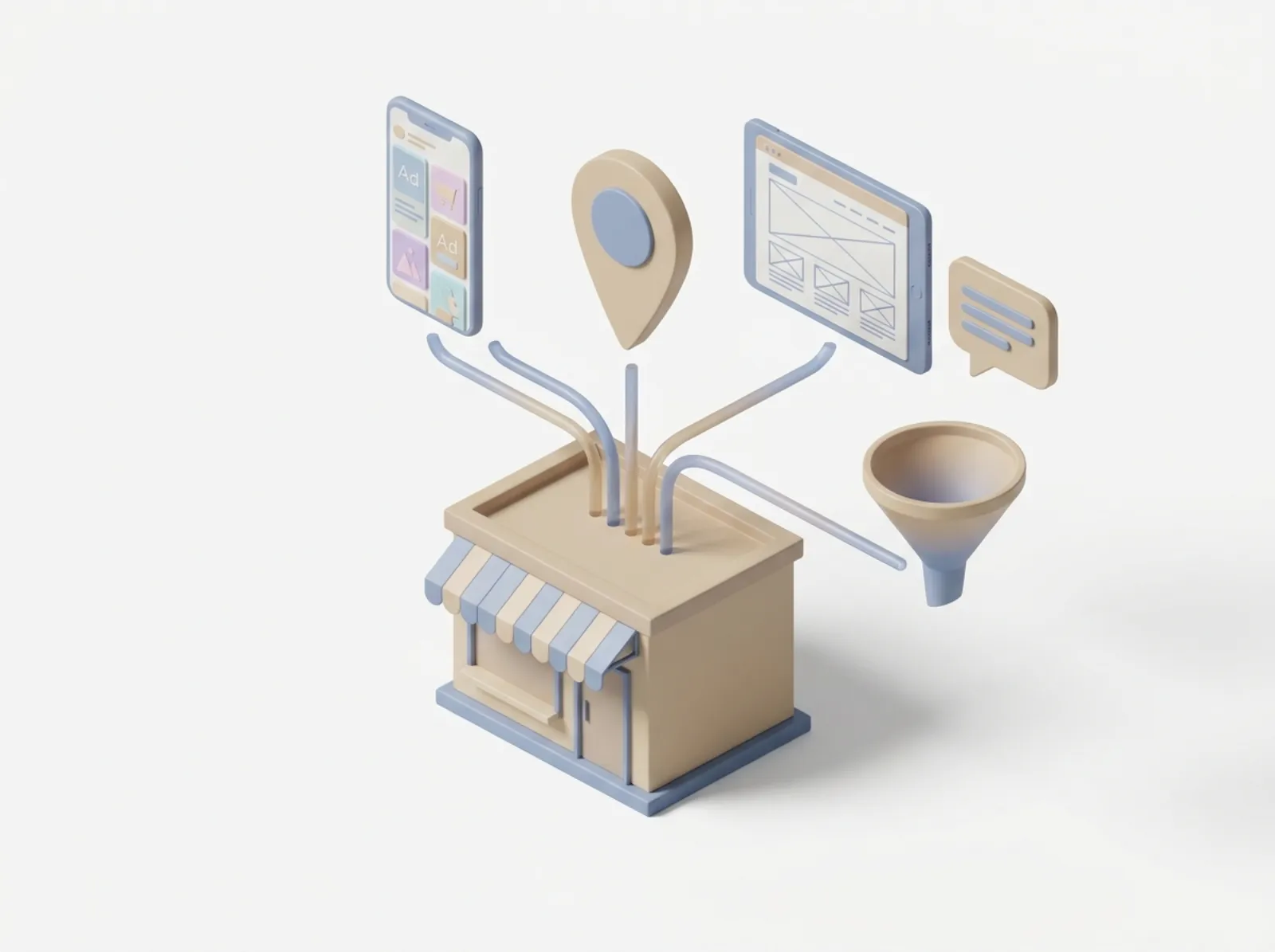
Isometric diagram of agribusiness marketing: search, ads, marketplaces and messaging converge into a sales funnel
We bring the marketing channels of an agribusiness into one funnel and plan them around the growers’ seasonal calendar.

Marketing channels for different agribusinesses

Agriculture isn’t one niche but several markets with different buyers.

ModelMain channelsWhat to emphasize
Supplier of equipment and partsEquipment marketplaces, Google Ads by model, trade shows, dealersAvailability, service, equipment demonstrations in the field
Seed, fertilizer and crop protectionField days, agronomist content, Google Ads by crop, dealersDemo plot results and application guidance
Farm (products)A storefront website, local food directories, social media, direct sales to restaurantsProvenance of the products and regularity of supply
Processor and buyer of raw materialSearch by crop, direct contact with growers, platformsReceiving terms, logistics and settlement
Services for growersGoogle Ads by region, farm newsletters, referralsExperience in the region, lead times and equipment

Who it’s for, and who it isn’t

A good fit if

  • A supplier of equipment, parts or implements operating in several regions.
  • A company selling seed, fertilizer or crop protection through its own reps and dealers.
  • A farm that wants to sell products directly, without depending on middlemen.
  • An agribusiness that spends on trade shows and ads but can’t see what produces deals.

Not a fit if

  • You have goods only in a one-off volume: systematic marketing makes sense with regular sales.
  • The company isn’t ready to plan marketing in advance and expects results in the middle of the season from a standing start.

What to keep in mind in agricultural marketing

The most important thing in agricultural marketing is the calendar. Every crop and every region lives on its own cycle, and the window when a farm is ready to listen to an offer is shorter than it seems. We build the marketing plan from that cycle: content and ads prepared before the decision window, a presence at trade shows, active work with inquiries in the buying window, and field results collected for the next season.

The second point is trust through proof. A grower risks the crop, so they believe not advertising but what they have seen themselves: results on the neighboring field, equipment running at a demonstration, a recommendation from an agronomist they know. Demo plots, field days and video from farms work harder than any ad and become the basis of content for the whole year.

The third is the rules. In the US, the word “organic” on packaging and in advertising can be used only for products certified under the USDA National Organic Program, and the EU and the UK have their own organic regulations. Claims for pesticides and other crop protection products must stay consistent with the registered label, and general advertising law requires that claims be truthful and supported. We build these limits into website and ad copy from the first day.

  • A channel plan built from the customer’s field calendar.
  • Proof from the field instead of advertising promises.
  • Dealer work through a shared CRM.
  • Wording that respects organic and crop-protection labeling rules.

Checklist: what to prepare to start marketing

If something is missing, we’ll help you collect it at the first stage.

  • The product range you want to sell first, and the regions where you sell.
  • The calendar of your season: when customers plan, buy and pay.
  • Photos and video from fields, equipment at work and demo plot results.
  • A list of dealers and how leads are distributed now.
  • Access to your website, Google Analytics, ad accounts and marketplace listings.
  • Where you keep customers and deals: a CRM, an ERP or spreadsheets.

FAQ: Marketing for agribusiness

We quote on request after a brief. The price depends on the number of regions, the set of channels, participation in trade shows and whether you need a CRM and dealer work. Advertising budgets are discussed separately, around the seasonal plan.
Yes, when it answers specific searches: an equipment model, a hybrid, a product, a region. Growers search online for parts, equipment, technologies and buyers for their crop. General image ads work poorly.
Ahead of time, before farms form their purchasing plan. For seed and fertilizer that is the period after harvest and the winter; for equipment it is the time of year-end calculations. We build the exact calendar for your product and region.
Through your own storefront, local food and farm directories, outreach to restaurants and stores, delivery to households and social media with the story of the farm. Regular supply is essential, or direct customers won’t stay.
For suppliers of equipment and crop inputs, often yes: it is where you meet the heads of farms. But a show pays off only with preparation: meetings booked in advance and quick follow-up of contacts afterwards.
Through a shared CRM or an exchange of statuses: the lead goes to the dealer with its source and the dealer records the outcome. You can then see which regions and dealers take customers to a deal.

Tell us about your business — we'll come back with a marketing plan

In return you'll get an audit of your current marketing, the points where leads leak and a channel plan. Usually within one day. Free and with no obligation.

4 of 6 project slots open this week.

Request received

Thank you! We'll come back with your marketing audit, the points where leads leak and a channel plan — usually within one business day.

More from Growth Bureau

Get an audit