Marketing for restaurants that brings guests into the dining room and orders into the kitchen

Guests find a place to eat in three spots: on the map near them, in a delivery app and in a social feed. We build restaurant marketing across all three at once and count not reach but reservations, orders and return visits.

Reply within 15 minutes · project assessment — free · pricing on request

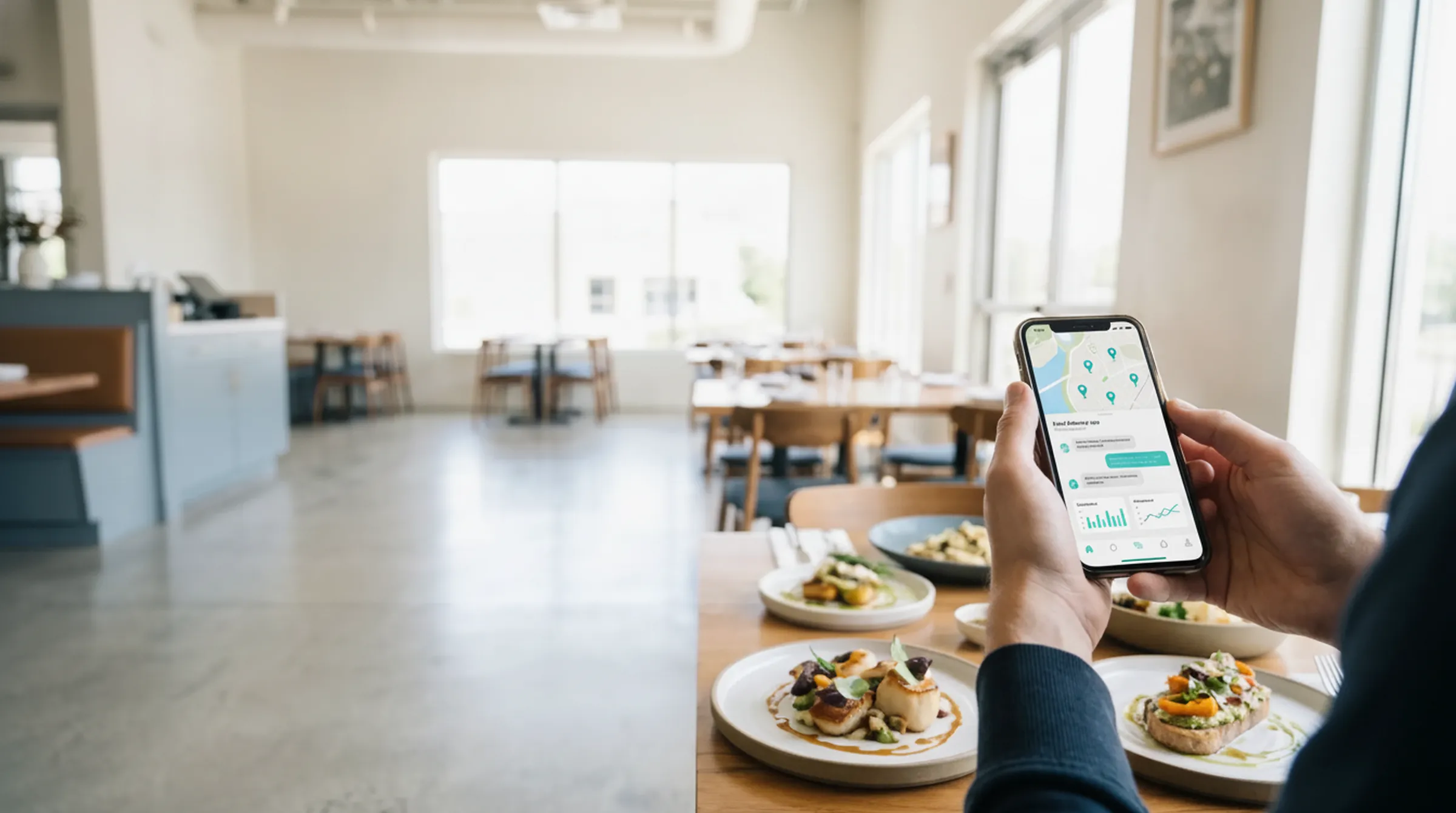
A restaurant owner’s hands holding a smartphone: on the screen a map with venue pins and a delivery app, with plated dishes on the table

Marketing for restaurants is work on the channels guests use to choose where to eat: Google Maps and Business Profile, Yelp, delivery apps such as DoorDash and Uber Eats, reviews, social media, creators and ads. We set up these channels for restaurants, cafes and coffee shops, connect them to reservations and the POS, and show how many guests each one brought in.

Why new guests don’t find your restaurant

Situations owners of restaurants, cafes and coffee shops bring to us. The cause is almost always channels that work in isolation or don’t work at all.

“On the map we rank below places where the food is worse”

Most “where should we go” decisions are made on a map within a few blocks. If the profile is incomplete and reviews go unanswered, the guest picks your neighbor.

We bring your Google Business Profile and other listings up to standard: categories, menu, photos, hours, a reservation button, regular posts and replies to every review.

“We get few orders on DoorDash, and the commission eats our margin”

A listing on a delivery app with weak photos and an unplanned menu sinks in the app’s results, and discounts are handed out without checking the economics.

We rebuild the storefront: dish photos, category order, bundles, prep times. We launch promotions and paid placement in the app only after calculating the margin per item.

“We run social media, and we can’t see guests coming from it”

Posts for the sake of posting: beautiful photos but not a single reservation that can be tied to a post.

We build content around reasons to visit: a new menu, events, a lunch special, brunch. Every post has an action: a reservation, a preorder, a code that can be tracked.

“We don’t know what in our advertising really works”

Money goes to creators, paid social and delivery apps, and the result is judged by how full the room feels on Friday.

We set up tracking: UTM tags, promo codes, call tracking, goals for reservations and orders, reconciled with the POS. You see which channel brings guests and which only brings reach.

What’s included in marketing for a restaurant

We choose channels to match the format: a coffee shop near an office park, a restaurant with a private dining room and a cafe with delivery need different priorities.

Google Maps and Business Profile

Completing the profile, the menu and photos, products, posts, a reservation button and replies to reviews. Paid local promotion separately, if it pays off in your area.

Yelp, Apple Maps and dining guides

Listings on Yelp, Apple Business Connect, OpenTable or Resy and your city’s dining guides with identical addresses, hours and menus.

Delivery apps

DoorDash, Uber Eats, Grubhub and local services: storefront, photos, bundles, promotions, rating and paid placement inside the app, with payback calculated.

Review management

Collecting reviews after a visit with a QR code and a text message, replies on behalf of the venue and working through negative feedback with the manager. The rating on maps directly shapes a guest’s choice.

Social media and content

Instagram, TikTok and Facebook: a content plan built around occasions, photography of dishes and the room, event announcements and giveaways with clear rules.

Creators and local media

Finding local food creators and city accounts with a real audience near you, a brief, a promo code for tracking visits, and FTC-compliant disclosure.

Paid social and search

Meta ads by location around the venue, and Google Ads on queries like “restaurant near me,” “private dining” and “sushi delivery,” plus occasion-based searches.

Guest database and return

A loyalty program, email and text messages, birthday greetings and event invitations. A returning guest costs less than a new one.

Services we work with

Marketing rests on the venue’s systems: without a link to the POS and reservations, you can’t count how many guests a channel brought.

POS and loyalty

Toast, Square, Lightspeed: average check, visit frequency, rewards programs. We verify channel promo codes against the POS.

Reservations

OpenTable, Resy, Tock or SevenRooms: bookings from maps, the website and social media in one system with a source tag.

Maps and delivery apps

Google Business Profile, Apple Business Connect, DoorDash, Uber Eats: statistics on views, directions, calls and orders for each platform.

Analytics

Google Analytics 4, call tracking, and a report in a spreadsheet or Looker Studio: guests and revenue by channel every week.

Messaging and CRM

Email and text campaigns with opt-in consent, and event inquiries in HubSpot or a similar CRM with stages through to the deposit.

Free audit of your marketing

Leave your contact — we'll show where leads and money leak, which channels to scale and which to switch off. No sales pitch.

Thank you! Request received — we'll get back with your marketing audit within one business day.

How we build marketing for a restaurant or cafe

We work in short cycles: first what brings guests fastest, then channels with a longer effect.

Step 01

Audit of the venue and the area

We review your profiles, rating and reviews, your delivery app storefronts, social media and competitors within walking distance. We go through the POS: average check and traffic by day and hour.

Step 02

Maps and reviews

We bring profiles up to standard and start collecting reviews. This is the foundation: any ad sends the guest to your profile, and it has to convince them.

Step 03

Delivery apps

We rebuild the storefront, calculate dish margins and decide which promotions and in-app promotion are justified.

Step 04

Content, creators, ads

We launch occasions: a new menu, events, lunch specials. We bring in creators and ads for the neighborhood, each channel with its own promo code or tag.

Step 05

Report and reallocation

Every week we combine guests and revenue by channel, switch off what is weak and strengthen what brings guests with a healthy check.

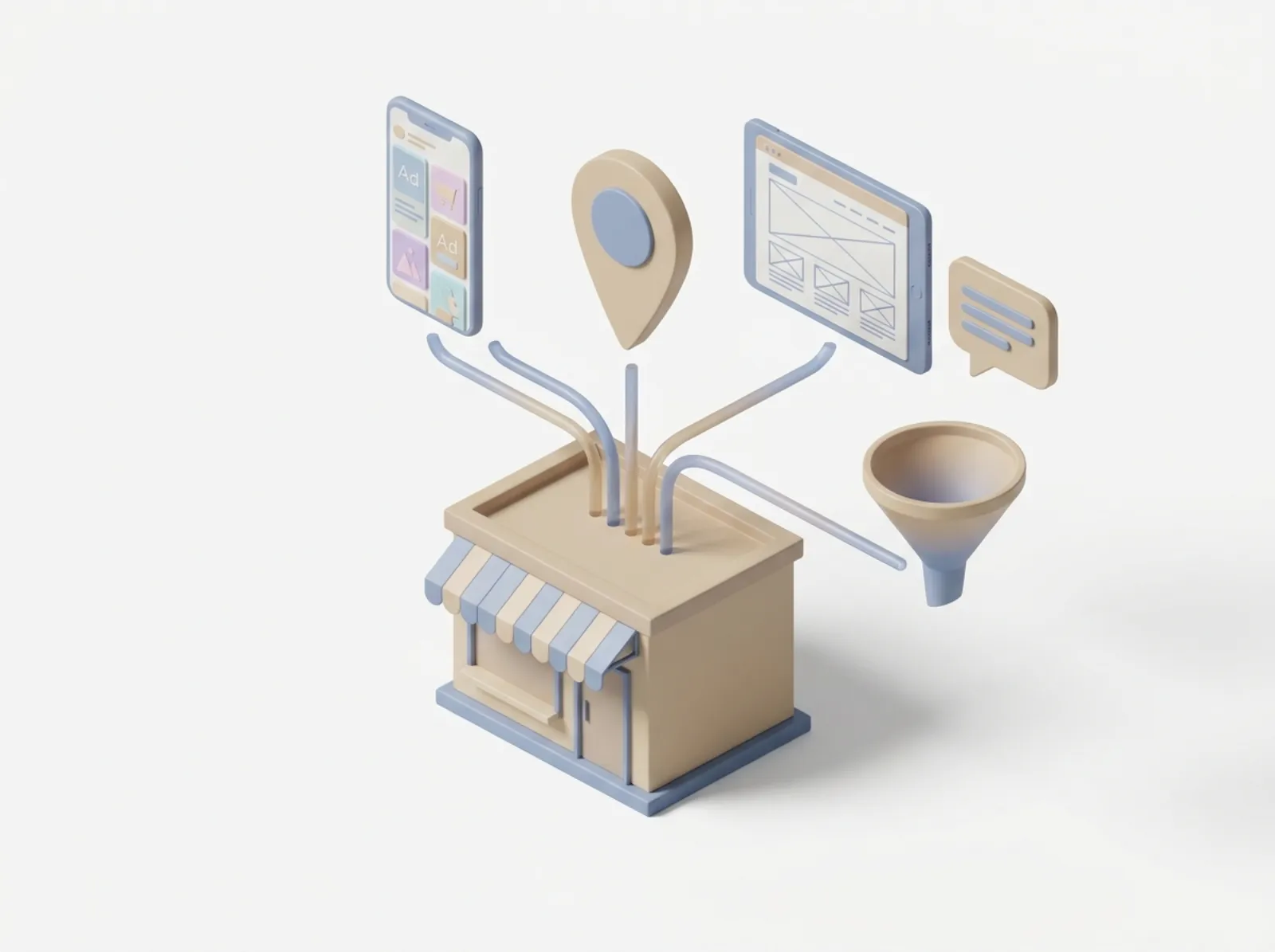
Isometric marketing diagram: a storefront, a smartphone, a map pin, a website and messages converge into a sales funnel
The venue’s marketing channels converge into a reservation, an order and a guest database.

Marketing channels for a restaurant: what and when

Each channel has its own role. The mix depends on the format and on how many guests walk in versus order delivery.

ChannelWhat it givesWho needs it mostHow we measure
Google Maps and YelpNearby guests, directions, callsEvery venue with seatingDirections, calls, reservations from the profile
Delivery appsDelivery ordersCafes and restaurants with a takeout kitchenOrders and margin after commission
ReviewsTrust and a place in map resultsEveryone, especially new locationsRating, number of recent reviews
Social mediaReturn visits, reasons to comeRestaurants with events, coffee shopsReservations and codes from posts
CreatorsA quick burst of interestOpenings, a new menuVisits by promo code
Paid adsA controllable flow for occasions and eventsPrivate dining rooms, groupsReservations and inquiries by tag

Who it’s for, and who it isn’t

A good fit if

  • A restaurant, cafe or coffee shop with seating that needs more guests on weekdays and off-peak hours.
  • A venue on DoorDash or Uber Eats that wants to understand where delivery pays off and where it doesn’t.
  • A new location that needs to build a rating and a first wave of guests quickly.
  • A group of venues that needs to manage the profiles and reviews of every address from one place.

Not a fit if

  • The kitchen and service aren’t ready for a surge: ads will speed up a wave of bad reviews.
  • You want someone to “just run Instagram” with no link to reservations and the POS. We don’t work that way.

Marketing a coffee shop and a restaurant: the difference

A coffee shop lives on frequency: a guest comes several times a week, the average check is small, so the main tool is retention. The map profile has to be flawless for people searching “coffee near me,” and after that loyalty, preorder for pickup and social media with occasions do the work: seasonal drinks, new pastries, breakfast. Creators and ads matter at opening, then selectively.

A restaurant sells occasions: dinner, a date, a birthday, a business meeting, a private event. Here reviews with photos, the rating, the manager’s replies, the private dining menu and events weigh more. Ads on occasions in Google Ads and Meta work if they lead to a page with a reservation or an event inquiry form, not to the home page.

Marketing on delivery apps is a separate economy. The platform’s commission and discounts must fit within the dish’s margin, or every order cuts profit. We work this out before launching promotions and often start with the storefront: photos, category order and bundles bring orders without extra spending.

Limits matter too. Alcohol advertising is regulated by federal and state rules and by platform policies, which restrict targeting by age and require careful wording, so we promote bar events through food, atmosphere and music. Creator posts and giveaways must disclose partnerships clearly. If your website isn’t ready for reservations and orders yet, start with a website for a restaurant.

FAQ: Marketing for restaurants

We quote on request after an audit. The price depends on the number of channels, locations and the volume of content. Ad spend and creator fees are budgeted separately, agreed with you and spent only after payback is calculated.
With a complete profile: categories, a menu, quality photos of the room and the dishes, hours, a reservation button. Then fresh reviews and replies to them. We add paid local promotion once the profile is convincing.
Start with the storefront: photos, ingredients, category order, bundles. Then calculate dish margins with commission included, and only after that add promotions and paid placement inside the app. Items that don’t pay off in delivery are better removed.
Yes. For a coffee shop the emphasis is on maps, loyalty, preorder for pickup and social media with occasions. Marketing a coffee shop is built on visit frequency, not on a one-time flow.
Every channel gets its own tag: a promo code, a UTM link to the reservation page, a tracking phone number. We reconcile reservations and checks with the POS and the reservation system, and show a report every week.
Alcohol advertising is restricted by federal and state rules and by each platform’s policy, so we check wording and targeting case by case. Bars are usually promoted through events, food, atmosphere and music.
For a start, profiles on maps and delivery apps are enough. A website is needed when you want your own reservations and delivery without commission, and ads for occasions with dedicated landing pages.

Tell us about your business — we'll come back with a marketing plan

In return you'll get an audit of your current marketing, the points where leads leak and a channel plan. Usually within one day. Free and with no obligation.

4 of 6 project slots open this week.

Request received

Thank you! We'll come back with your marketing audit, the points where leads leak and a channel plan — usually within one business day.

More from Growth Bureau

Get an audit