Marketing for furniture companies that fills the showroom and the measure calendar

Furniture is a slow purchase. People spend weeks collecting ideas, comparing finishes, walking into a showroom to touch the fabric and the door fronts, and only then agree to a site visit. We build furniture marketing around that path: channels for the inspiration stage, for comparison and for the visit itself, with booked measures and showroom appointments as the result we report on.

Reply within 15 minutes · project assessment — free · pricing on request

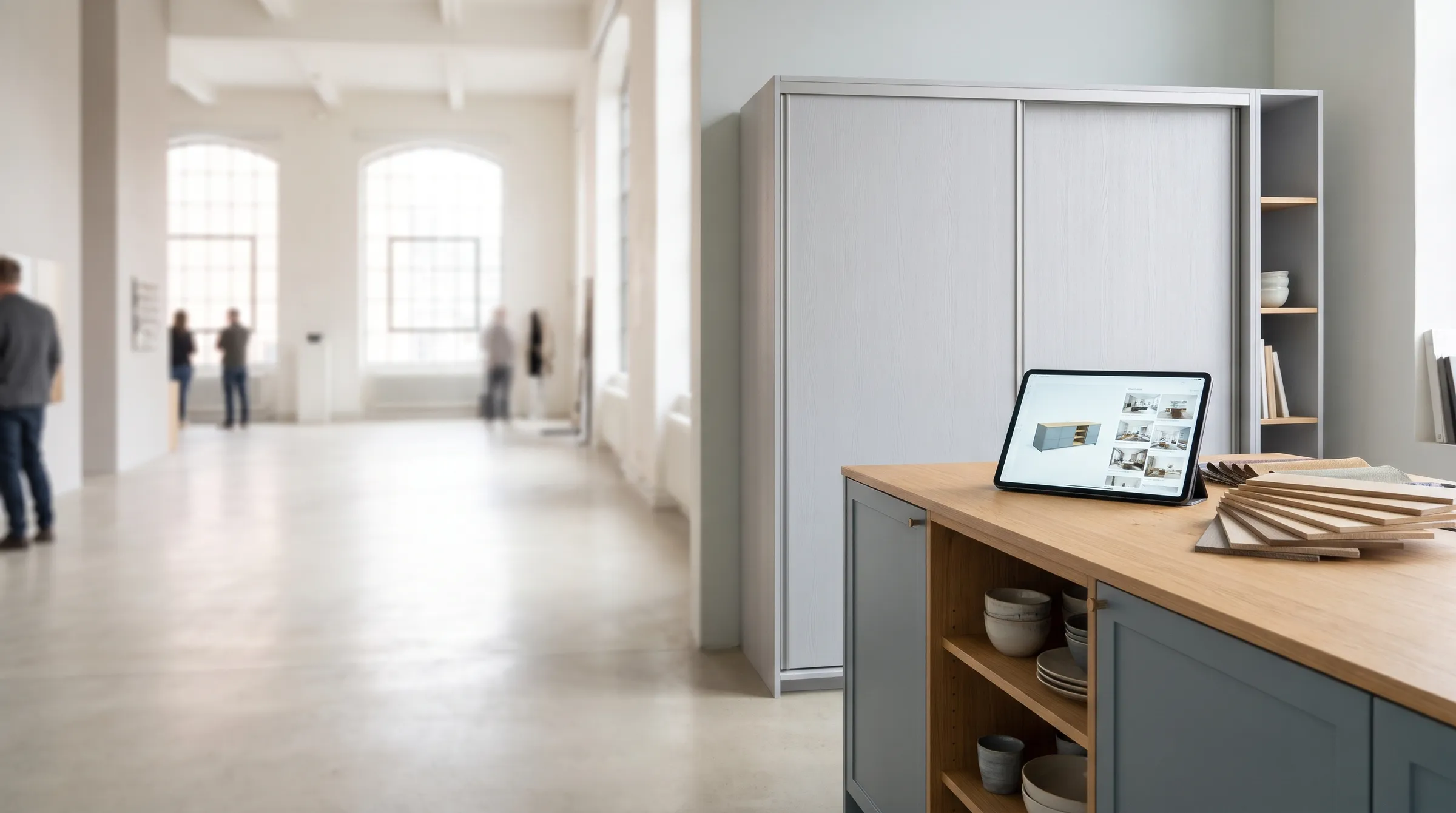
Custom furniture showroom with a kitchen and a wardrobe on display, a tablet showing a 3D configurator and interior mood boards, wood and fabric samples on the table

Marketing for furniture companies is a set of channels that bring buyers into the showroom and onto the measure calendar: Google Shopping and Search ads, Google Business Profile, Amazon, Wayfair and Etsy for ready-to-ship pieces, Pinterest and Instagram for custom work, and a website with a catalog and a quote form. We tie these channels into one funnel and report on measures booked and orders signed.

Why a furniture store pays for ads and still waits for buyers

Situations that showrooms and custom furniture makers bring to us.

“We get plenty of inquiries, but half of them just want a ballpark on a kitchen”

Designers spend their hours on quotes for people who aren’t ready to buy, and the warm leads wait in the queue.

We add qualification before the quote: a configurator with room parameters, questions about timeline and project scope, and a separate nurture track for people who are still collecting ideas. The measure slots go to buyers who are ready to start a project.

“We have a showroom in a retail park, and nobody knows it’s there”

A shopper searches “furniture store near me”, sees a competitor with a full gallery and reviews, and drives there instead.

We rebuild the Google Business Profile for every location, add showroom photos, products and a review routine after delivery, and run local campaigns around the showroom.

“Ready-to-ship pieces sell on marketplaces, but our own website doesn’t sell anything”

The marketplace keeps a fee and the buyer’s contact details, and nobody comes back for the next room.

We split the roles: marketplaces for stock items, the website and showroom for custom work and room sets, with a path that moves marketplace buyers into your own customer list.

“We build beautiful projects, but nobody sees them”

Photos of finished kitchens and wardrobes sit on the installer’s phone, even though they are the strongest argument you have.

We turn every installation into content: a portfolio on the site, Instagram posts, Pinterest pins, and galleries sorted by style and room size.

What’s included in furniture company marketing

The channel mix depends on the model: a showroom with stock furniture, a custom manufacturer or an online store with delivery.

Shopping and Search ads

Google Shopping and Performance Max campaigns built from your product feed, plus Search campaigns for terms like “custom kitchen cabinets” or “built-in wardrobe”, targeted by service area.

Google Business Profile and showrooms

A profile for each location with current hours, product and service listings, showroom photos and reviews, plus local ads for people near the store.

Marketplaces

Amazon, Wayfair and eBay for ready-to-ship pieces, and Facebook Marketplace for floor samples and clearance items.

Pinterest for custom work

Pins of finished projects sorted by style and room, boards with ideas that lead to the portfolio and the quote form. This is the channel for the inspiration stage.

Instagram and Houzz

A portfolio with finished projects, production behind the scenes and customer reviews, plus Meta ads aimed at people who are moving or renovating.

A website with a configurator

A catalog, a portfolio, a kitchen or wardrobe configurator based on room dimensions, and a booking form for a measure or a showroom visit.

Trade program for designers

A program for interior designers and contractors: sample kits, clear trade terms and fast feedback on their projects.

Analytics through to the signed order

Tracking from the first click to the measure and the contract in Google Analytics 4 and your CRM, so the budget follows signed orders.

Systems we connect to your marketing

A furniture company usually runs several programs at once. Marketing has to see the data from all of them.

CRM

HubSpot, Pipedrive or Zoho CRM: inquiry, measure, design proposal, contract, production, installation. More in our CRM implementation service.

Design and cabinet software

SketchUp, Cabinet Vision, 2020 Design and similar tools: renderings for the portfolio and for customer sign-off.

Inventory and catalog

Shopify, WooCommerce or the inventory module of your ERP: the product feed for Merchant Center and marketplaces, plus current stock of ready-to-ship items.

Call tracking

Dynamic numbers per channel with a tool like CallRail, so you can see which source produced the call that ended in a measure.

Messaging and SMS

WhatsApp Business and SMS for sending renderings, confirming design details and reminding customers about the measure and the installation date.

Free audit of your marketing

Leave your contact — we'll show where leads and money leak, which channels to scale and which to switch off. No sales pitch.

Thank you! Request received — we'll get back with your marketing audit within one business day.

The buyer’s path for custom furniture

The road from idea to contract is long. Each stage needs its own channel and its own message.

Step 01

Inspiration

A renovation, a move, a new house. The shopper collects ideas on Pinterest and Instagram and saves the projects they like.

Step 02

Finding a maker

Searches such as “custom kitchen cabinets near me” or “built-in wardrobe”, comparing companies on Google Maps, Houzz and company websites.

Step 03

Evaluation and comparison

A configurator, a portfolio, reviews, door and hardware options. Fast replies in chat and on WhatsApp decide a lot at this point.

Step 04

Showroom and measure

A visit to touch the materials, then the site measure. This is the moment that marketing works toward.

Step 05

Contract and installation

Design proposal, contract, production and installation. Afterward comes a review request and permission to photograph the finished project.

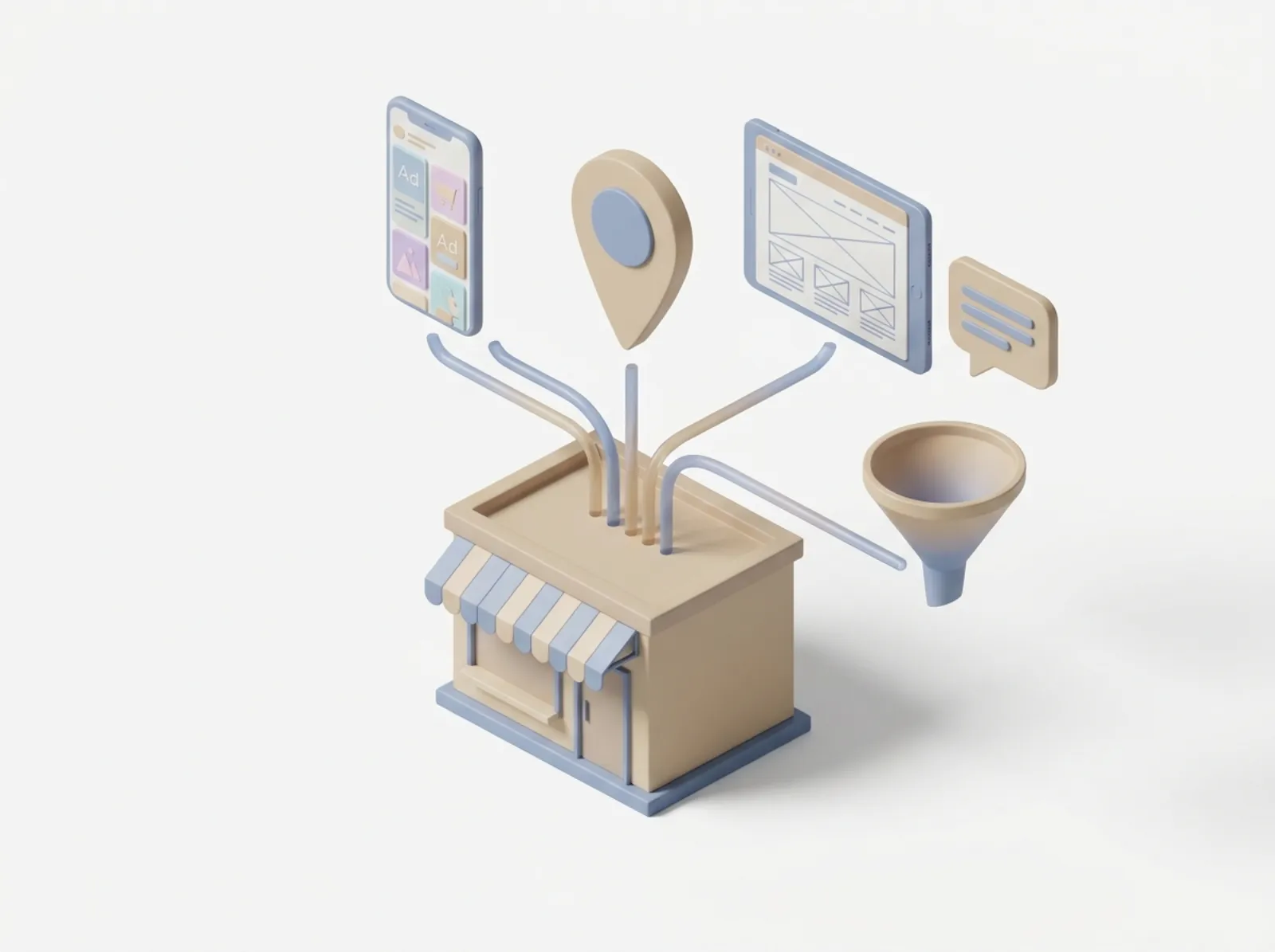
Isometric diagram of a marketing system: a store linked to a smartphone showing ads, a map listing, a website, a chat and a funnel
Furniture marketing channels lead to a showroom visit and a booked measure.

Stock furniture or custom work: different channels

The sales model decides which channels pay off.

FactorReady-to-ship furnitureCustom furniture
Main marketing goalAn online order or a store visitA booked measure and a design proposal
Core channelsMarketplaces, Shopping ads, Google MapsSearch, Google Business Profile, Pinterest, Instagram, Houzz
Role of the websiteA catalog with availability and delivery termsA portfolio, a configurator and a measure booking form
Sales cycleFrom minutes to a few daysWeeks, sometimes months
Main argumentAvailability and delivery speedFinished projects, materials, reviews, installation quality
What to measureOrders and revenue by channelMeasures, signed contracts and average project value

Who it’s for, and who it isn’t

A good fit if

  • A furniture showroom or a group of showrooms that needs a steady flow of visitors.
  • A custom furniture maker who wants measure requests directly, not through intermediaries.
  • An online furniture store that wants to grow beyond marketplaces.
  • A company launching a new line: kitchens, walk-in closets, contract furniture for offices and hotels.

Not a fit if

  • Your factory is fully booked with dealer orders and you don’t need retail demand.
  • You have no photos of finished projects and no material descriptions: custom furniture is very hard to promote without a portfolio.

What’s specific about furniture marketing

Furniture is an expensive purchase that people judge with their eyes. That’s why the main working material here is photography and renderings of real projects. We set up a routine in which every installed kitchen or wardrobe becomes content: photos, material notes, room dimensions and the customer’s brief. The same material feeds the website, social profiles and ads.

Pinterest is a channel for the inspiration stage. People build boards for kitchens, closets and kids’ rooms, and a pin of your project can bring a visitor who hasn’t started looking for a maker yet. It doesn’t replace search and maps, but it works well for companies with a strong visual portfolio. Before launching, we check whether your audience is actually there.

Demand follows renovations and moves, so seasonality is milder than in construction, but there are peaks: new housing developments, spring and early summer renovation season, back-to-school for kids’ furniture. We track new developments in your area and set up geo-targeting for the people who live there.

Finally, trade buyers. Many projects arrive through interior designers and general contractors, and they need separate communication: samples, clear trade terms and quick estimates. For catalog and category visibility in organic search, you can add SEO on top.

FAQ: Marketing for furniture companies

We quote on request after a short brief. The price depends on the number of showrooms, the channels and the size of the catalog. Ad spend is paid separately, and we break the estimate down by channel.
Pinterest works as a visual search engine for interior ideas, so it can bring in people at the inspiration stage. It suits companies with good project photography and needs regular publishing. Most leads still come from search, Google Business Profile and Instagram.
For ready-to-ship pieces, yes: Amazon, Wayfair and eBay are large sales channels. For custom furniture, marketplaces rarely fit, because the customer is buying a project with a site measure, not a catalog item. We take that into account when picking channels.
Add qualification before the visit: a configurator with room parameters, questions about timeline and scope, and renderings sent over chat. People who are still browsing get a nurture track and an invitation to the showroom.
Yes, as a trust point and as a landing place for ads: a portfolio, reviews, a configurator and a measure booking form. Without a site it’s harder to run search ads and to build your own customer list.
In measures booked, contracts signed and average project value per channel. For that, leads and calls must reach the CRM with a source, and managers need to record the outcome of each measure.
Ads and local listings produce inquiries within days of launch, while content and organic search build up over time. We don’t promise timelines or contract volumes, but we agree on a plan and metrics at the start.

Tell us about your business — we'll come back with a marketing plan

In return you'll get an audit of your current marketing, the points where leads leak and a channel plan. Usually within one day. Free and with no obligation.

4 of 6 project slots open this week.

Request received

Thank you! We'll come back with your marketing audit, the points where leads leak and a channel plan — usually within one business day.

More from Growth Bureau

Get an audit