Marketing for dentists that fills the providers’ schedules

New dental patients arrive from different places: a search for a procedure, the map near home, a referral, a review on a rating site. We build marketing for a dental practice as one system. Every channel leads to a clear booking, and you see how many new patients each channel brought and which procedures they chose.

Reply within 15 minutes · project assessment — free · pricing on request

A dental office waiting area, a hand holding a smartphone with a map and a pin for the practice with a star rating, a dental chair visible behind the glass

Marketing for dentists is a set of channels that bring new patients into the practice: Google Maps and Google Business Profile, local SEO by procedure, Google Ads, profiles on review and booking sites such as Zocdoc and Healthgrades, review management and booking tracking. We build that system within healthcare advertising rules and measure the result in booked appointments, not clicks.

Why a dental practice runs ads and still has open chairs

Situations dental practices bring to us.

“We pay for Google Ads, and patients say they found us on the map”

The budget is split by guesswork: it isn’t clear which channel brings patients and which only brings calls asking for a price.

We set up call tracking and connect it to your practice management software. We count new patients and production by channel and shift budget based on facts.

“A competitor ranks above us on the map, though our practice is better equipped”

A patient in pain picks the closest practice with a high rating and recent reviews, without ever visiting your website.

We optimize your Google Business Profile for every location, set up a steady review request after each visit, and reply to reviews on behalf of the practice.

“Plenty of calls, few appointments”

The front desk quotes a price and hangs up without offering an exam. The ads work, and the money leaks away on the phone.

We review recorded calls, write front-desk scripts and track the share of calls that end in a booking.

“A patient finished treatment and vanished for years”

The practice spends money on new patients while its own patients don’t come back for cleanings and checkups.

We set up reminders for hygiene visits, exams and the rest of the treatment plan through text messages, email and patient communication tools.

What’s included in dental practice marketing

The mix of channels depends on your format: a neighborhood practice, an implant-focused practice or a group of locations.

Google Maps and Business Profile

A profile for each location, services and photos, review collection and replies, local ads. More on this in our local SEO service.

Local SEO by procedure

Pages for implants, braces and clear aligners, veneers, pediatric dentistry and each neighborhood you serve. We target the searches patients use to choose a practice.

Google Ads

Campaigns for high-value services and for dental emergencies, dedicated landing pages, and negative keywords that block irrelevant searches.

Review and booking sites

Profiles for the practice and its doctors on Google, Yelp, Healthgrades and Zocdoc where they apply: descriptions, availability and review handling.

Reputation

Review monitoring across all platforms, replies, and handling negative feedback through a conversation with the patient that respects privacy.

Social media and content

Instagram, Facebook and short video: the doctors, how treatment goes, answers to patients’ fears. No promises of results and in line with healthcare advertising rules.

Booking control

Call tracking, call review, front-desk scripts, and a link between inquiries and completed visits in your practice software.

Patient reactivation

Recall messages for cleanings and exams, invitations to continue treatment, and family programs.

Systems we connect your marketing to

To count results in patients, marketing has to see what the front desk sees.

Dental practice management software

Dentrix, Eaglesoft, Open Dental, Curve Dental and similar systems: new-patient visits, production per patient, and the booking source.

Call tracking

CallRail, CallTrackingMetrics and similar tools: number swapping by channel, call recording, and passing calls into analytics. Recording follows your state’s consent rules.

Listings and directories

Google Business Profile, Apple Business Connect, Yelp, Healthgrades and Zocdoc: identical addresses, phone numbers and hours for every location.

Analytics

Google Analytics 4, Search Console and end-to-end reporting: from a click or call to a visit and accepted treatment, configured so that patient health information is not sent to ad platforms.

Patient messaging

Text messages and email through HIPAA-conscious tools: appointment confirmations, visit reminders and recall invitations.

Free audit of your marketing

Leave your contact — we'll show where leads and money leak, which channels to scale and which to switch off. No sales pitch.

Thank you! Request received — we'll get back with your marketing audit within one business day.

How we launch marketing for a dental practice

We start by auditing what you already have, and only then add budget.

Step 01

Audit of channels and booking

We review your map profiles and listings, website, ads, front-desk calls and practice software data. We find where patients are lost.

Step 02

Strategy by service line

We rank procedures by production and provider capacity, then assign them to channels.

Step 03

Cleaning up the basics

We fix profiles, landing pages and front-desk scripts, and set up call tracking and conversion goals.

Step 04

Launch and testing

We turn on ads and local promotion for the priority services, and for the first weeks we review lead quality every day.

Step 05

Reporting in patients

Monthly, we show how many new patients and how much production each channel brought, and what we change next.

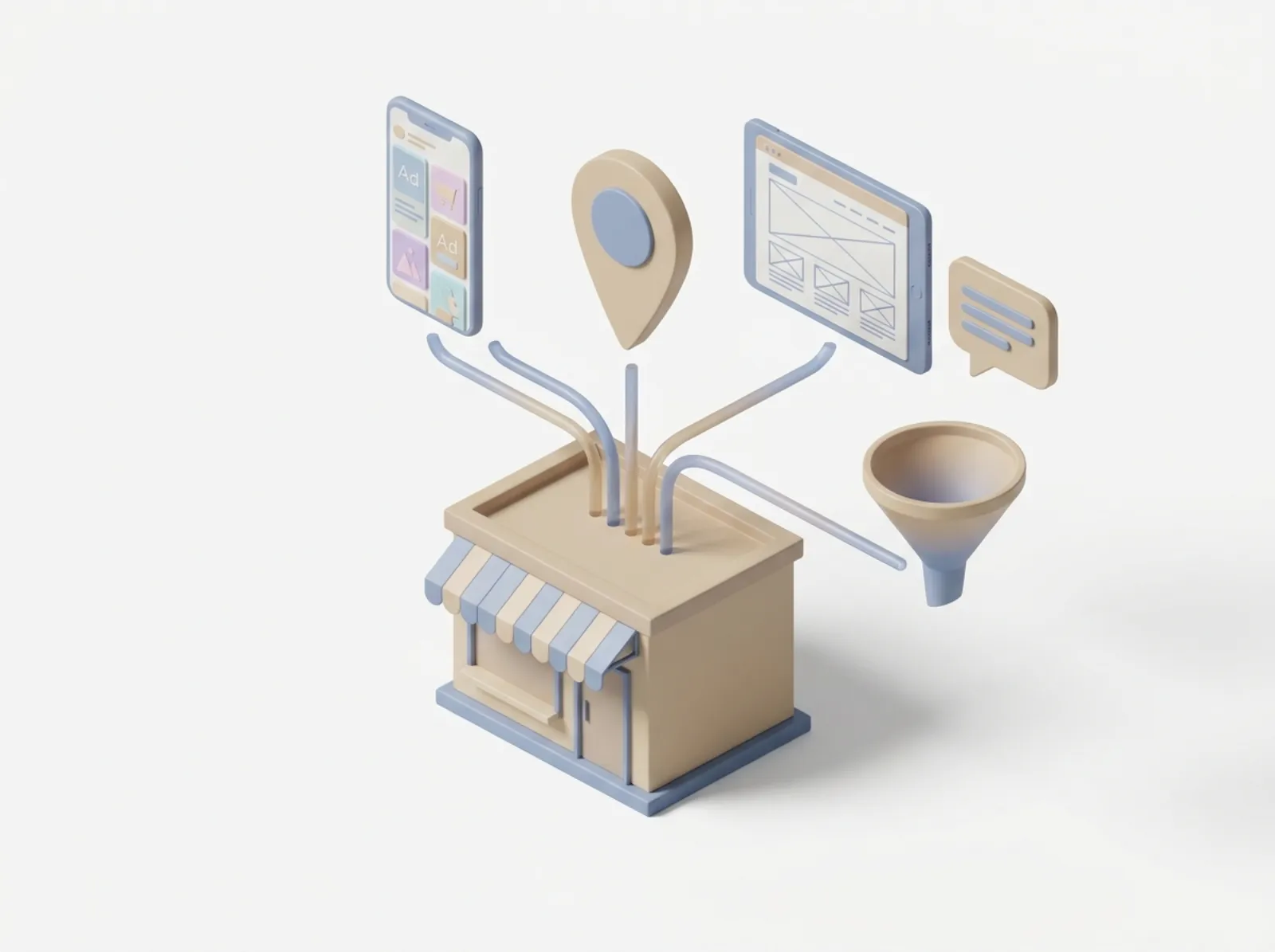
Isometric practice marketing diagram: a building connected to a smartphone with ads, a map, a website, a chat and a funnel
All of the practice’s marketing channels converge on the booked appointment.

Dental marketing channels: which is for what

Each channel has its own job. Full-service marketing divides the work between them.

ChannelWho it bringsWhen it pays off
Google Maps and Business ProfilePatients near the practice, including those in painAfter the profile is cleaned up and reviews build
Local SEOPatients choosing a practice for a major procedureOver the long term, cumulatively
Google AdsPatients searching for specific procedures and neighborhoodsFrom the first days after launch
Review and booking sitesPeople who choose a provider by rating and reviewsDepends on your rating and how complete your profiles are
Social mediaPeople who fear treatment and take a long time to decideBuilds trust and repeat visits
Messages to your own patientsRepeat visits and continued treatmentRight after setup

Who it’s for, and who it isn’t

A good fit if

  • A dental practice that wants to know which channel brings patients, not only calls.
  • A practice launching a new service line: implants, orthodontics, pediatric dentistry.
  • A group opening a new location that has to fill the providers’ schedules quickly.
  • A practice in a competitive metro area where the local map results are crowded.

Not a fit if

  • Your schedule is full for months and there is nowhere to put new patients.
  • The practice can’t share visit data: without it, results can’t be measured.

How dental marketing differs from marketing other services

Dentistry has two different kinds of new patient. The first arrives in pain: they need the nearest practice with an open slot today, and they choose on the map in a couple of minutes. The second is planning implants or braces: they compare several practices, study the doctors, read reviews and decide over weeks. The channels and the message differ, and Google Maps and Business Profile reach the first, while local SEO and content reach the second.

Healthcare advertising comes with rules. Google applies specific policies to health-related ads, Meta limits targeting that implies a person’s health condition and restricts some before-and-after imagery, and state dental boards set their own rules on claims such as calling yourself a specialist. Patient photos, testimonials and anything that identifies a patient require proper written authorization, and HIPAA applies to how patient information is handled. We write copy and set up tracking with these limits in mind so campaigns aren’t rejected or put at risk.

The third feature is the long life of a patient. One person comes for years for cleanings, restorative work and a crown, and brings the family. That is why we count the production of a patient over time rather than the cost of a lead, and include recall of your own patients in the plan. It is often the fastest reserve of schedule capacity.

Finally, the front desk. Even perfect ads won’t produce appointments if the team answers the question “how much is an implant” with a number and no invitation to an exam. We treat front-desk work and the link between inquiries and a CRM for dentists as part of the practice’s marketing. If the website itself is the bottleneck, see our page on web design for dentists.


FAQ: Marketing for dentists

We quote on request after an audit. The price depends on the number of locations, channels and service lines, and ad spend is paid separately. We break the proposal down by channel so you can see what you are paying for.
Maps bring patients who search for a practice nearby, especially people in pain. Your position depends on how complete the profile is, your rating, how recent the reviews are and how actively the practice manages the listing. We optimize profiles, set up review collection and add local ads.
Yes, in large cities and smaller markets alike. In dense metro areas competition on the map and in Google Ads is higher, so we pay more attention to narrow service lines and to the neighborhoods you serve.
In new patients and production, not clicks. That requires call tracking and visit data from your practice management software. Without them we can only count inquiries, and we say so honestly at the start.
You can advertise implants without promising an outcome and with any required disclosures. Photos of treatment results require the patient’s written authorization and must comply with your state dental board and platform rules, so we check them before anything is published.
Reply on behalf of the practice without revealing patient information, work through the situation with the patient, and feed the lessons back to the front desk and the clinical team. Reviews can be removed only if they break the platform’s policies. We cover that in our reputation management services.
Ads and local promotion can bring inquiries in the first days after launch, while maps and SEO build cumulatively. We don’t promise timelines or patient numbers, but we put checkpoints and metrics into the plan at the start.

Tell us about your business — we'll come back with a marketing plan

In return you'll get an audit of your current marketing, the points where leads leak and a channel plan. Usually within one day. Free and with no obligation.

4 of 6 project slots open this week.

Request received

Thank you! We'll come back with your marketing audit, the points where leads leak and a channel plan — usually within one business day.

More from Growth Bureau

Get an audit