Marketing for car dealerships that brings buyers in for a test drive, not into a chat asking “is it still available?”

A car buyer spends weeks studying listings and walks into the showroom with one specific vehicle in mind and a question about the final price. If the ad says one number and the desk says another, the buyer leaves and writes a review. We build dealership marketing around real inventory, honest terms and fast handling of every inquiry.

Reply within 15 minutes · project assessment — free · pricing on request

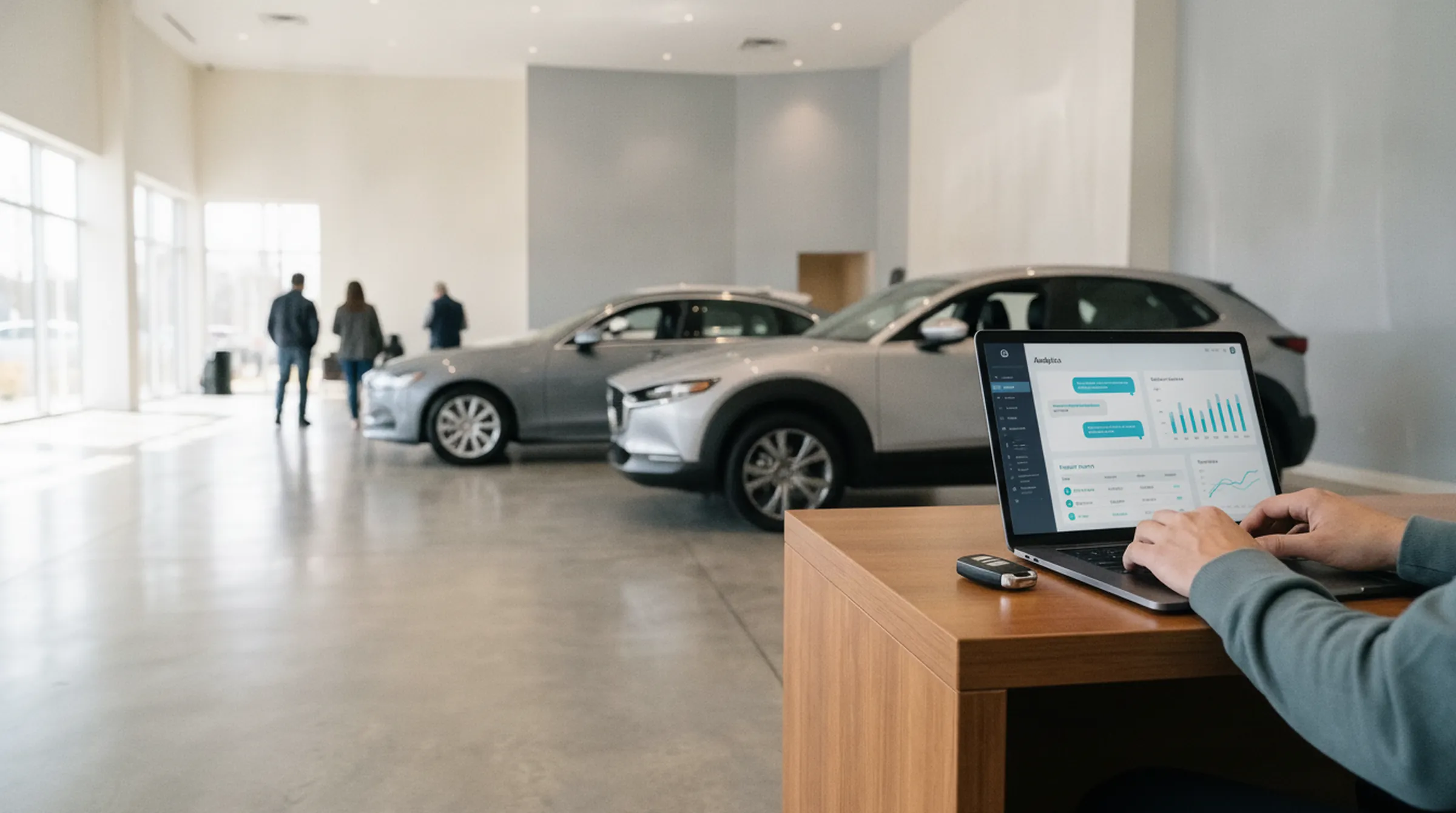
Dealership showroom: a gray sedan and a silver crossover on a concrete floor, a laptop with analytics and a car key on the sales consultant’s desk

Marketing for car dealerships is the work of a franchised or used-car dealer’s marketing: ads driven by the inventory on the lot, listings on Cars.com, AutoTrader and CarGurus, Google Business Profile, reviews and a CRM that all serve one goal, which is to take a buyer from the first look at a listing to a test drive, a deal and delivery.

Where a dealership loses buyers

Situations that sales managers at franchised stores and used-car lots describe to us.

“Listing sites eat the budget, but deals don’t go up”

Vehicles are listed and views keep coming, but calls go nowhere: a salesperson calls back an hour later, when the shopper has already booked a visit at another store.

We route leads from Cars.com, AutoTrader and CarGurus into the CRM, set response-time rules and see which listings produce test drives and which produce only views.

“Our ads show cars we’ve already sold”

A shopper calls about a vehicle that is gone, gets annoyed and stops trusting the rest of your listings.

Advertising runs off the inventory feed: when a vehicle sells, its ad switches off by itself, and a new arrival goes into ads without manual work.

“Reviews on Google complain about a price that wasn’t real”

One review about a “price that wasn’t there” scares off more buyers than a month of advertising brings in.

We align the price in the ad with the price at the desk, answer every review on the merits and ask for reviews after delivery.

“We can’t tell what trade-ins and financing actually bring in”

Revenue from trade-ins, financing and add-ons is counted apart from ad spend, and budget gets cut from the channels that brought the most profitable buyers.

End-to-end tracking of the whole deal: the vehicle, the trade-in, the financing and the accessories. Budget follows deal revenue, not call volume.

What’s included in dealership marketing

A franchised dealer and an independent used-car lot are marketed differently. We assemble the work around your model.

Store positioning

What you do better: inventory on the lot, inspection of pre-owned vehicles, trade-in terms, speed of paperwork. These become the messages for every channel.

Listing sites

Cars.com, AutoTrader and CarGurus: photos and descriptions to one standard, pricing review, replies to messages and calls, and a check that every listing is current.

Inventory-based ads

Google Ads built from your inventory feed, including vehicle listing ads: model, trim, year, mileage. Retargeting for shoppers who viewed specific vehicles, and Meta catalog ads from the same feed.

Trade-in and buy-your-car campaigns

Separate campaigns and landing pages for instant trade valuations and cash offers. For used-car stores this is also a source of inventory.

Maps and reviews

Google Business Profile with fresh photos, review replies and handling of negative feedback. More in reputation management.

Video and social

Walkaround videos of vehicles on the lot, a pre-owned inspection on camera, this week’s arrivals. Builds trust and reaches shoppers who are still choosing a model.

A website with live inventory

A vehicle catalog fed from your inventory system, test-drive booking, trade-in and financing pre-qualification forms. More in website design for car dealerships.

Analytics down to delivery

Ads, calls and deals linked together, so you can see which channel leads to a vehicle delivered and how much gross each buyer brought in.

Systems we connect

In a dealership, data about inventory, deals and advertising lives in different systems. We connect them to show the buyer’s whole path.

Dealership CRM

Your dealer CRM or a general-purpose one such as HubSpot or Salesforce: a pipeline with a test drive, a trade-in appraisal, a finance application and delivery. More in CRM for car dealerships.

Inventory feed

A feed exported from the dealer management system (DMS) to ads, the website and listing sites: price, trim, photos and status update automatically.

Listing-site leads

Calls and messages from Cars.com, AutoTrader and CarGurus go into the CRM, tied to the exact vehicle the shopper asked about.

Call tracking

Tracking numbers for every channel and listing site: you see where a call came from and how it ended.

Google Analytics 4 and offline conversions

Deal stages such as “test drive” and “delivered” are sent from the CRM to Google Analytics 4 and Google Ads, so campaigns learn from buyers.

Free audit of your marketing

Leave your contact — we'll show where leads and money leak, which channels to scale and which to switch off. No sales pitch.

Thank you! Request received — we'll get back with your marketing audit within one business day.

The buyer journey for a vehicle purchase

Most of the choice happens online. Marketing has to be present at every step and not lose the buyer on the phone.

Step 01

Choosing a model

The shopper watches reviews, compares models and trims, and works out a budget that includes their current car and financing.

Step 02

Finding a specific vehicle

They scroll listing sites and dealer websites, filter by year, mileage and trim, and save a few options.

Step 03

First contact

A call, a text or a form submitted from the listing. Response speed matters here, and so does an honest answer on price and availability.

Step 04

Visit and test drive

An inspection, a test drive, an appraisal of the trade-in and a financing pre-approval.

Step 05

Deal and delivery

Paperwork, signing and handing over the keys. The CRM records the source and the gross of the deal.

Step 06

Service and the next purchase

A review after delivery, an invitation to the service lane, a trade-in offer a few years later.

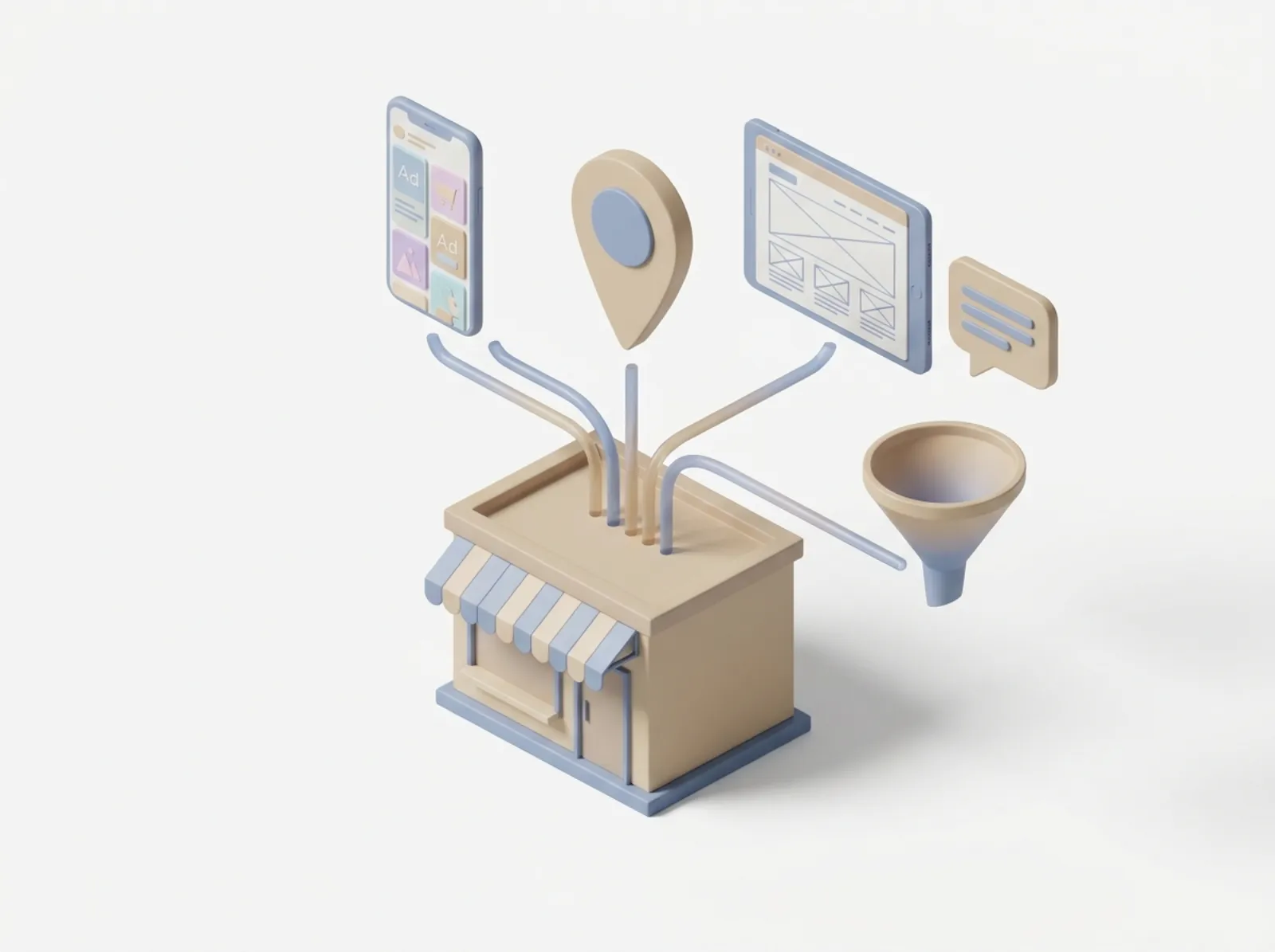
Isometric diagram of dealership marketing: listing sites, ads, maps and messaging converge into one funnel ending in vehicle delivery
We bring the dealership’s channels into one funnel: a listing view, a call, a test drive, a deal and delivery.

Franchised dealer or used-car lot: what matters in marketing

The channels overlap a great deal, while the messages and the constraints differ.

QuestionFranchised dealerUsed-car dealer
Main source of inquiriesWebsite, search ads by model, listing sitesListing sites, ads driven by the inventory feed
What it sellsNew vehicles of the brand, service, accessoriesSpecific vehicles, each with its own history
The buyer’s main questionAvailability, delivery timing, the final priceMechanical condition and a clean title
How we build trustDealer status, brand standards, the service departmentInspection reports, vehicle history reports, walkaround video
ConstraintsThe manufacturer’s requirements for ads and visualsAn accurate description of each vehicle’s condition

Who it’s for, and who it isn’t

A good fit if

  • A franchised dealer who wants more test drives and deals with less dependence on listing sites.
  • A used-car store that needs a steady flow of buyers and of vehicles to acquire.
  • A dealership that spends on ads but can’t see which channels lead to a delivery.
  • A dealer group with several stores that needs unified analytics.

Not a fit if

  • You have a handful of vehicles and the stock barely changes: there is nothing to market systematically yet.
  • The store isn’t ready to align the price in the ad with the price at the desk: ads will only bring in negative feedback.

What matters in dealership marketing

In automotive the buyer arrives prepared. They have seen your listing and a dozen similar ones, they know the market price and they ask pointed questions. Dealership marketing works when listings are current, the price is clear and the salesperson answers fast and without tricks. Any gap between the ad and reality turns into a review right away.

The second feature is that a deal is made of several revenue sources: the vehicle itself, the trade-in, financing, an extended warranty, accessories. If marketing counts only calls, it can’t see which channels bring profitable buyers. That is why we connect ads to the CRM through the delivery stage and calculate revenue across the whole deal.

The third is advertising rules. In the US, once an ad for a financed vehicle states a payment amount or a down payment, federal Truth in Lending rules (Regulation Z) require the other key credit terms to be disclosed too, and state consumer-protection laws add their own requirements. Franchised dealers also follow the manufacturer’s advertising standards, so we agree copy and creatives in advance.

  • Ads driven by current inventory.
  • Response speed treated as part of marketing.
  • Revenue counted across the whole deal, not by calls.
  • Financing offers that carry the required disclosures.

Checklist: what to prepare before we start

If something is missing, we’ll help you put it together in the first phase.

  • An inventory export or access to your DMS or vehicle inventory system.
  • Trade-in, financing and insurance terms that you can advertise.
  • The manufacturer’s advertising requirements, if you are a franchised dealer.
  • Access to listing sites, ad accounts, Google Analytics 4 and Google Business Profile.
  • How inquiries are distributed among salespeople and what their schedule is.
  • Where you track deals and how you calculate revenue on each one.

FAQ: Marketing for car dealerships

We quote on request after a brief. The price depends on the size of your inventory, the number of stores, the set of channels and whether the feed and the CRM need to be integrated. Budgets for listing sites and ads are discussed separately.
Usually you need both. Listing sites bring the main flow of inquiries on specific vehicles, while Google Ads built from the inventory feed brings search demand and retargeting. We set the balance from deal data, not from call volume.
Through trust in each specific vehicle: detailed photos, walkaround video, inspection results and a vehicle history report. We also promote trade-ins and cash offers separately to keep the inventory replenished.
Most often the buyer is lost on the phone: a slow reply, a listing that is out of date or a price that differs from the ad. Connecting listing sites, call tracking and the CRM shows at which stage people drop off.
If an ad states one credit term, such as a monthly payment or a down payment, the rules on credit advertising may require other key terms to be disclosed as well. We agree the copy of such ads with your compliance contact or attorney.
Reply to every review on the merits, find the cause and fix the process behind it. At the same time, ask satisfied buyers for reviews after delivery.

Tell us about your business — we'll come back with a marketing plan

In return you'll get an audit of your current marketing, the points where leads leak and a channel plan. Usually within one day. Free and with no obligation.

4 of 6 project slots open this week.

Request received

Thank you! We'll come back with your marketing audit, the points where leads leak and a channel plan — usually within one business day.

More from Growth Bureau

Get an audit